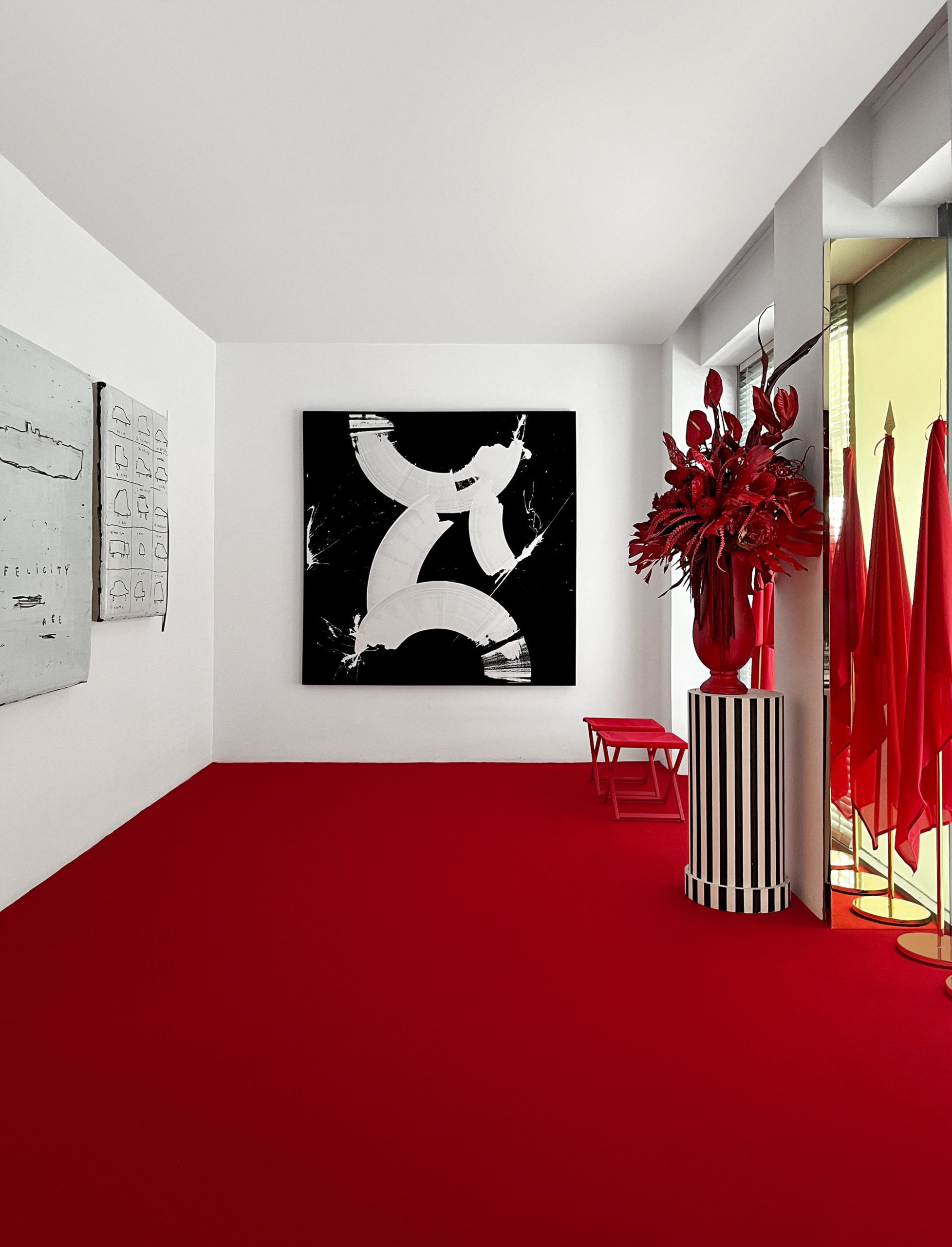
“Sin pretenderlo, hemos creado un diálogo entre artistas que trabajan en Mallorca y Madrid y que tienen en común una búsqueda de los lenguajes que redefinen de esa vieja disciplina que es la pintura. Aquí están los futuros Basquiat o Hirst”, afirma Aaron.
«Without intending to, we have created a dialogue between artists who work in Mallorca and Madrid and who have in common a search for languages that redefine the old discipline of painting. Here are the future Basquiat or Hirst», says Aaron.
El empresario y coleccionista Drew Aaron (Filadelfia, Pensilvania, 1977) vive y trabaja en Palma de Mallorca. Está casado con la top model checa Hana Soukupová –ex ángel de Victoria’s Secret y protagonista de más de cien portadas de revistas internacionales de moda– y es padre de tres niños.
Aaron comenzó su carrera en Boston, vendiendo su primera empresa de Internet a EBAY a finales de los 90, antes de terminar la Universidad. Cuando se graduó, creó junto a su padre, una distribuidora de papel que fue adquirida posteriormente en 2018 por la japonesa Konica Minolta. En paralelo, ha participado activamente en el mercado inmobiliario como inversor y promotor.
Drew ha ocupado cargos en varios consejos de administración y comités ejecutivos de organizaciones con y sin ánimo de lucro. Entre ellas se incluyen ASPCA, The Whitney Museum, Unlock the Cure, DKMS New Yorkers for Children, Trump y YPO Metro New York.
En 2016, se mudó con su familia a Mallorca buscando un cambio de estilo de vida para criar a sus hijos lejos de la agitada vida de Nueva York. Cuando negociaba la adquisición de una possessió en la Tramontana, descubrió que no había una empresa que diera servicios de intermediación financiera en el segmento de casas de lujo o arte. Así funda Lionsgate Capital y actualmente es el mayor broker en las Islas Baleares y del sur de España. Dos años después, en 2018, crea Gallery RED. A finales de 2021, Drew recibió el Premio de Otoño del IE Alumni Baleares Club, en reconocimiento a sus logros empresariales y por aportar innovación a Mallorca y España. En 2022, Drew se convirtió en miembro de la Junta Directiva de la Mallorca Preservation Foundation, que apoya la protección medioambiental y la sostenibilidad de Mallorca. En su colección encontramos una de las latas de sopa Campbell de Warhol. Fue su primer cuadro. En ese primer año, 2006, compró más de 100. Hay grandes nombres como Richard Prince, Damien Hirst, Eric
Freeman, Basquiat, David LaChapelle o Christopher Wool. Ahora quiere añadir una buena selección de artistas. Tiene a Miró, Marria Pratts o a Antonio Ballester Moreno. Ha sido designado por la prestigiosa revista Modern Painters como uno de los mejores coleccionistas de arte del mundo con menos de 50 años. “Entre los coleccionistas importantes, yo soy el más pobre”, bromea.
Entrepreneur and collector Drew Aaron (Philadelphia, Pennsylvania, 1977) lives and works in Palma de Mallorca. He is married to Czech top model Hana Soukupová – former Victoria’s Secret Angel and star of over a hundred international fashion magazine covers – and is the father of three children. Aaron began his career in Boston, selling his first Internet company to EBAY in the late 1990s, before finishing college. When he graduated, he created with his father, a paper distributor that was subsequently acquired in 2018 by Japan’s Konica Minolta. In parallel, he has been active in the real estate market as an investor and developer. Drew has held positions on various boards of directors and executive committees of for-profit and non-profit organizations. These include ASPCA, The Whitney Museum, Unlock the Cure, DKMS New Yorkers for Children, Trump and YPO Metro New York. In 2016, she moved with her family to Mallorca seeking a lifestyle change to raise her children away from the hectic life of New York. While negotiating the acquisition of a possessió in the Tramontana, he discovered that there was no company providing financial intermediation services in the luxury home or art segment. So he founded Lionsgate Capital and is currently the largest broker in the Balearic Islands and southern Spain. Two years later, in 2018, he created Gallery RED. At the end of 2021, Drew received the Fall Award from the IE Alumni Baleares Club, in recognition of his business achievements and for bringing innovation to Mallorca and Spain. In 2022, Drew became a member of the Board of Directors of the Mallorca Preservation Foundation, which supports environmental protection and sustainability in Mallorca. In his collection we find one of Warhol’s Campbell’s soup cans. It was his first painting. In that first year, 2006, he bought more than 100. There are big names such as Richard Prince, Damien Hirst, Eric
Freeman, Basquiat, David LaChapelle or Christopher Wool. Now he wants to add a good selection of artists. He has Miró, Marria Pratts or Antonio Ballester Moreno. He has been designated by the prestigious Modern Painters magazine as one of the best art collectors in the world under the age of 50. «Among the important collectors, I am the poorest,» he jokes.
This is Cano Estudio’s gallery. John Pawson, Heidi Slimane, Hussein Chalayan and Yoshitomo Nara have all exhibited there. Juan Zamora, José Luis Cremades or Blanca Gracia have also developed projects. Among the group exhibitions are a tour of the new collage -El tiempo del collage- or drawings by 17th and 17th century masters.
Es la galería de Cano Estudio. Han expuesto en la misma desde John Pawson a Heidi Slimane, pasando por Hussein Chalayan o Yoshitomo Nara. También han desarrollado proyectos Juan Zamora, José Luis Cremades o Blanca Gracia. Entre las exposiciones colectivas destacan un recorrido por en nuevo collage –El tiempo del collage– o dibujos de maestros del siglo XVII y XVII. Alonso Cano no es una parada de metro.»
This is Cano Estudio’s gallery. John Pawson, Heidi Slimane, Hussein Chalayan and Yoshitomo Nara have all exhibited there. Juan Zamora, José Luis Cremades or Blanca Gracia have also developed projects. Among the group exhibitions are a tour of the new collage -El tiempo del collage- or drawings by 17th and 17th century masters.
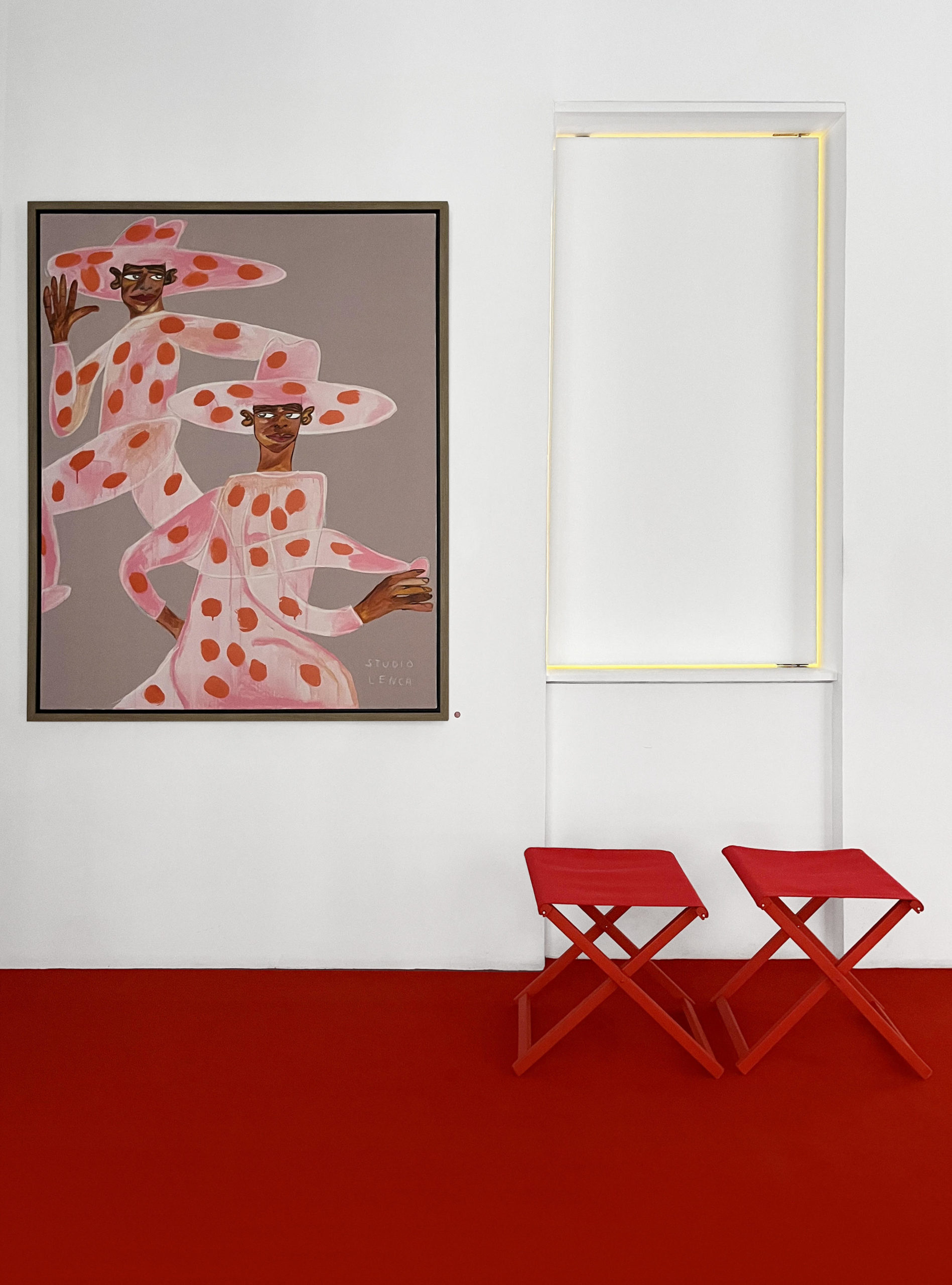
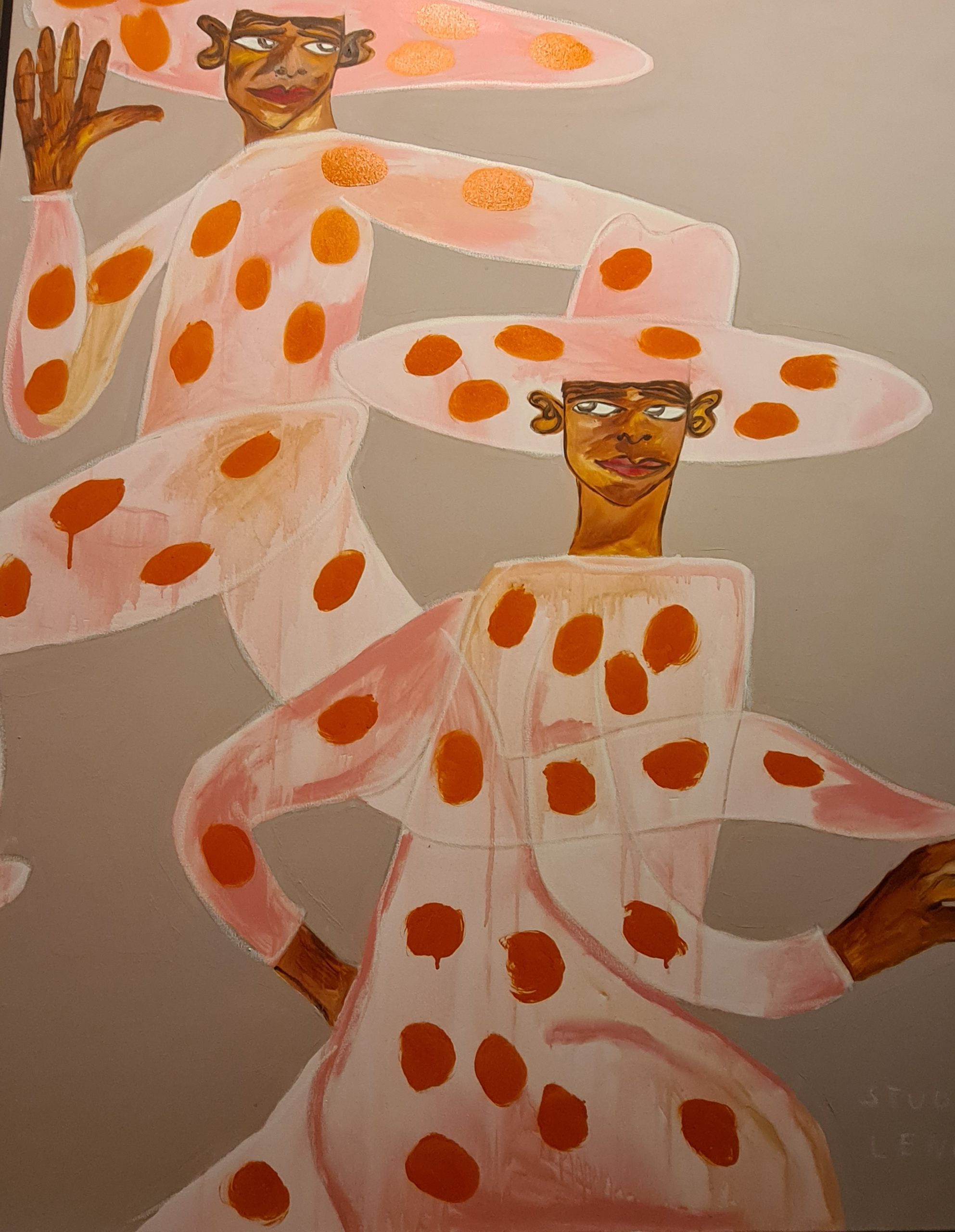
Studio Lenca (1986), es conocido bajo el nombre de José Campos, es un artista que vive y trabaja en el Reino Unido. Nació en La Paz (El Salvador) y, como muchos otros, tuvo que huir del país durante la violenta guerra civil a finales de la década de 1980. Viajó ilegalmente por tierra, con su madre, a San Francisco, California, y creció en esta ciudad como parte de la minoría homosexual, ante la mirada de una administración conservadora como “extranjero” indocumentado.
El trabajo de José se centra en las ideas que rodean la diferencia, el conocimiento y la visibilidad. Sus piezas suelen inspirarse en recuerdos personales y del activismo creativo o se apoyan en diferentes formas de praxis. Obra: Moving through space 2.
Studio Lenca (1986), known under the name of José Campos, is an artist who lives and works in the UK. lives and works in the United Kingdom. He was born in La Paz (El Salvador) and, like many others, had to flee the others, had to flee the country during the violent civil war in the late 1980s. He traveled illegally overland with his mother to San Francisco, California grew up in this city as part of the homosexual minority, under the gaze of a conservative administration as a «foreigner». Conservative administration as an undocumented «alien».
Jose’s work focuses on ideas surrounding difference, knowledge and visibility. His pieces often draw inspiration from personal memories and creative activism or draw on different forms of praxis.
Artwork: Moving through space 2.
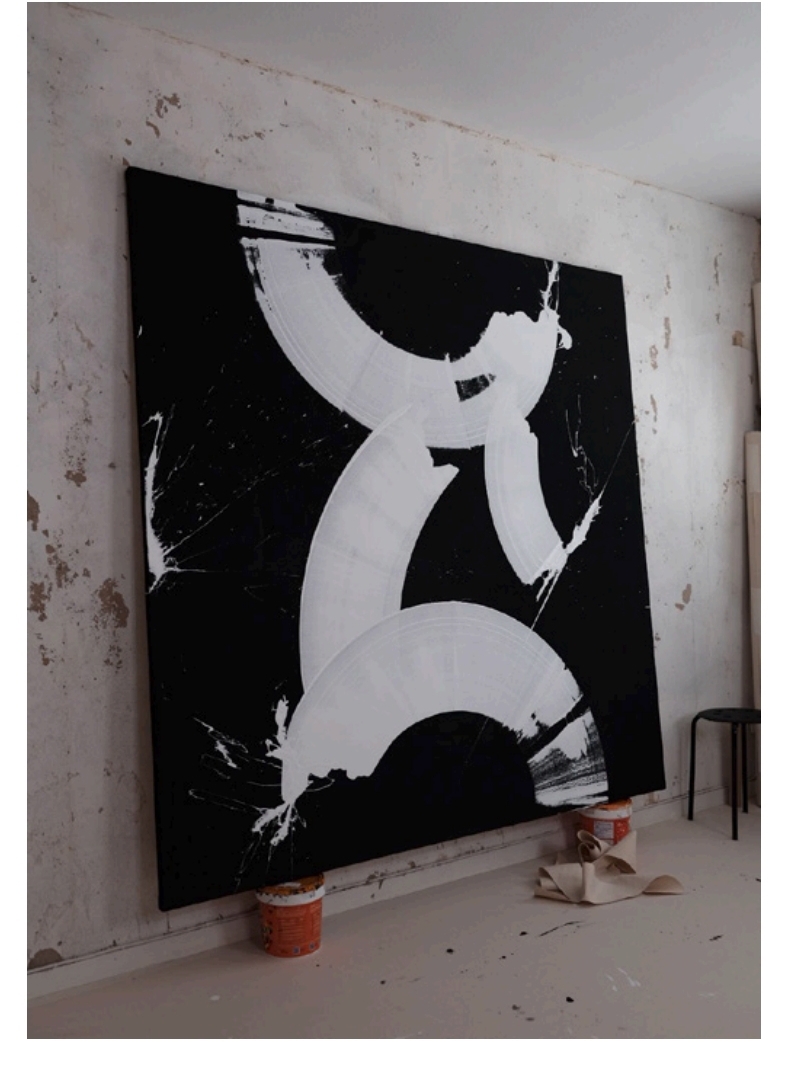
Viani (1982) es un artista español/italiano criado en Venezuela, que huyó del país asolado por la crisis política y se instaló en Barcelona en 2002. España le permitió una autonomía ilimitada de expresión a través de la pintura. El arte de Viani es un fuerte grito de libertad. “El arte es la herramienta que me libera de las ideologías políticas”. Su obra es profundamente emotiva, y cada pincelada expresa una dicotomía amor-odio. Su obra ha sido expuesta internacionalmente y se encuentra en colecciones privadas de todo el mundo.
Obra: After Glare.
Viani (1982) is a Spanish/Italian artist raised in Venezuela, who fled from the country
country ravaged by the political crisis and settled in Barcelona in 2002. Spain allowed him
unlimited autonomy of expression through painting. Viani’s art is a strong cry for freedom. «Art is the tool that frees me from political ideologies. political ideologies. His work is deeply emotional, and each brushstroke expresses a love-hate dichotomy love-hate dichotomy. His work has been exhibited internationally and is in private collections around the world.Private collections around the world.
Artwork: After Glare.
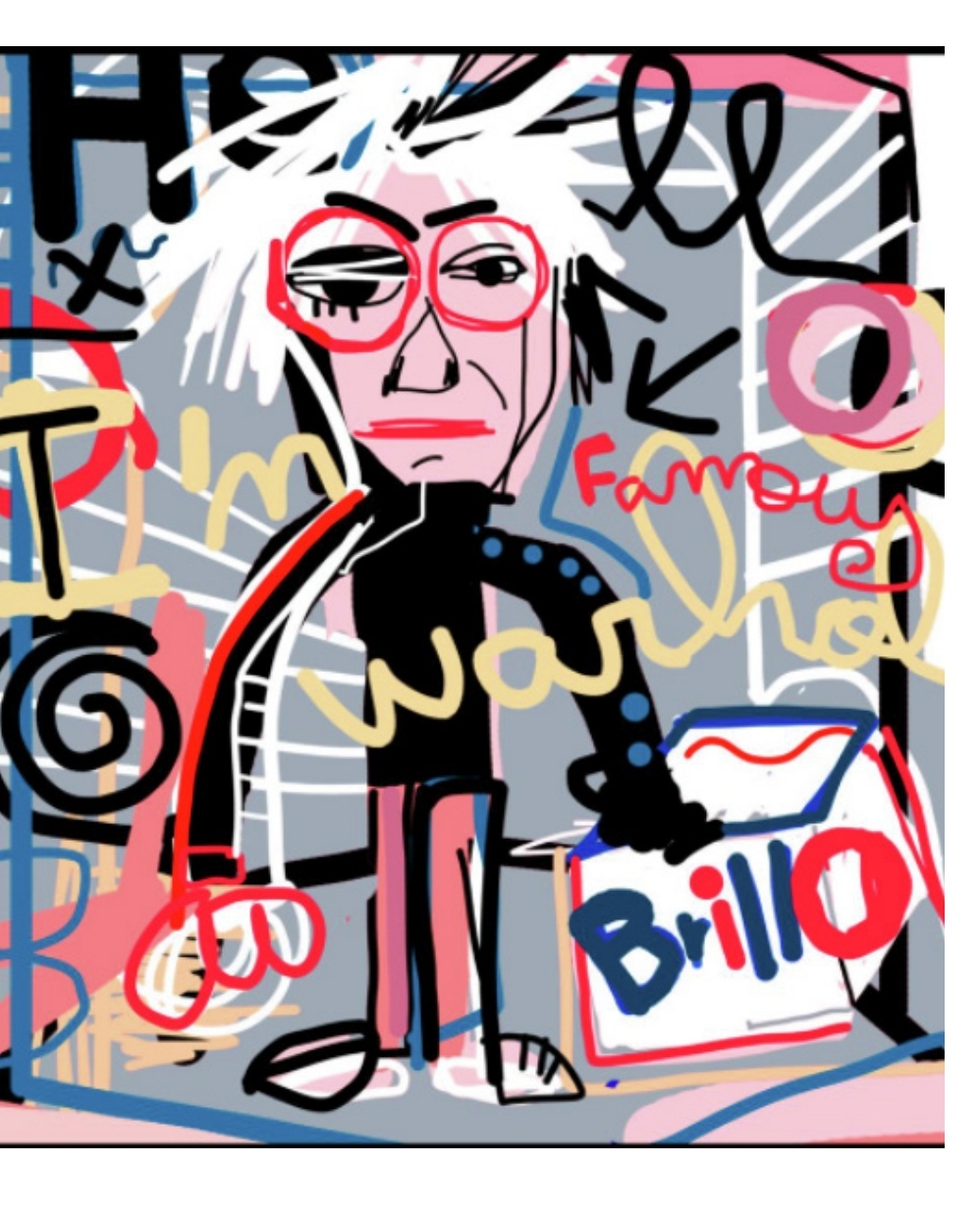
Miguel Caravaca (1979) representa realidades que surgen de sus reflexiones gracias a la observación y el estudio del cuerpo humano, centrándose especialmente en el rostro y sus expresiones como espejo del alma humana. Su objetivo final es compartir con el espectador esta proyección de su mundo interior y le invita a iniciar su propio proceso de reflexión utilizando una estética muy estudiada, donde el color y la forma son los principales protagonistas.
Sus referentes estéticos son el geometrismo abstracto, especialmente el cubismo que inspira el uso de la línea, y la importancia del pigmento y la composición, pero también el arte urbano, que hace que navegue con comodidad en el gran formato y que utilice materiales como el acrílico y rotuladores de esmalte.
En trabajo de Caravaca se evidencia que el cromatismo y la línea priman sobre la narrativa de la pieza: son los artilugios con los que trata de crear un impacto en el espectador, acercando además elementos de su cotidianidad, con la intención de provocar una experiencia estética desde las sensaciones y el deleite de la belleza. Obra: Hello, I ́m Warhol.
Miguel Caravaca (1979) represents realities that emerge from his reflections thanks to the observation and study of the human body, focusing especially on the face and its expressions as a mirror of the human soul. on the face and its expressions as a mirror of the human soul. His ultimate goal is to share this projection is to share with the spectator this projection of his inner world and invites him to initiate his own to initiate his own process of reflection using a very studied aesthetic, where color and form are the main protagonists.
His aesthetic referents are abstract geometrism, especially cubism -which inspires the use of the line, and the importance of pigment and composition, but also urban art, which makes him navigate comfortably in the large format and uses and uses materials such as acrylic and enamel markers. In Caravaca’s work it is evident that chromaticism and line take precedence over the narrative of the piece. narrative of the piece: these are the gadgets with which he tries to create an impact on the viewer, also bringing the viewer, bringing elements of his daily life, with the intention of provoking an aesthetic experience from the to provoke an aesthetic experience from the sensations and the delight of beauty. Artwork: Hello, I ́m Warhol.
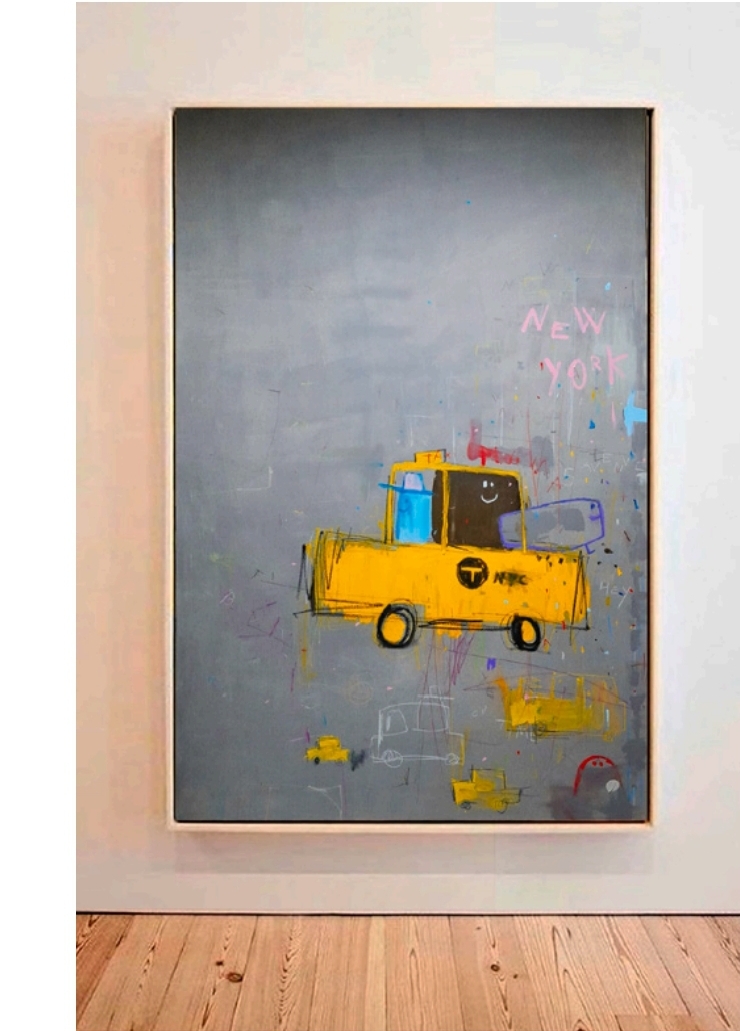
Montaña (1975) nació en una familia polifacética donde la cultura y el arte siempre han estado presentes a través de la literatura, la música, la escultura, la pintura y la moda. Estudió en ELISAVA, Escuela Superior de Diseño e Ingeniería de Barcelona. Con 21 años realizó su primera performance, Conformista sin Reflexión, y su primera exposición individual con 23 años, El Sol Español, en 1998, desde entonces no ha parado de exponer por el mundo.
“Los adultos somos niños maleducados. La educación, la importancia de la literatura infantil, los cuentos de antes de ir a dormir son el símbolo de los valores, de la libertad intelectual y los sueños por alcanzar, de eso va mi pintura, de imaginación, muy ligada al pensamiento metafórico, a la conciencia de las emociones y de la abstracción, de la poética, del amor y el desamor, de bailar rumba, de fiesta, de contar y explicar para entender la vida e indagar en lo más profundo de la viva libertad de expresión. Creo que es muy necesario aprender, entre otras cosas, a volar, o por lo menos intentarlo.” Obra: New York.
Montaña (1975) was born into a multifaceted family where culture and art have always been present through literature, music, sculpture, painting and fashion. Through literature, music, sculpture, painting and fashion. He studied at ELISAVA, Escuela Superior de Diseño e Ingeniería de Barcelona. At the age of 21 years old, he made his first performance, Conformist without Reflection, and his first individual exhibition at the age of 23, El Sol Español, in 1998, since then he has not stopped exhibiting around the world. since then he has not stopped exhibiting around the world.
«We adults are rude children. Education, the importance of children’s literary. The education, the importance of children’s literature, the bedtime stories are the symbol of values, of intellectual freedom and the dreams to be achieved. That is what my painting is about, imagination, closely linked to metaphorical thinking, to the awareness of emotions and abstraction, of poetics, of love and indifference, of dancing rumba, of partying, of telling and explaining in order to understand life and to delve into the depths of the living freedom of expression. I think it is very necessary to learn, among other things, to fly, or at least try to do so.» Artwork: New York.
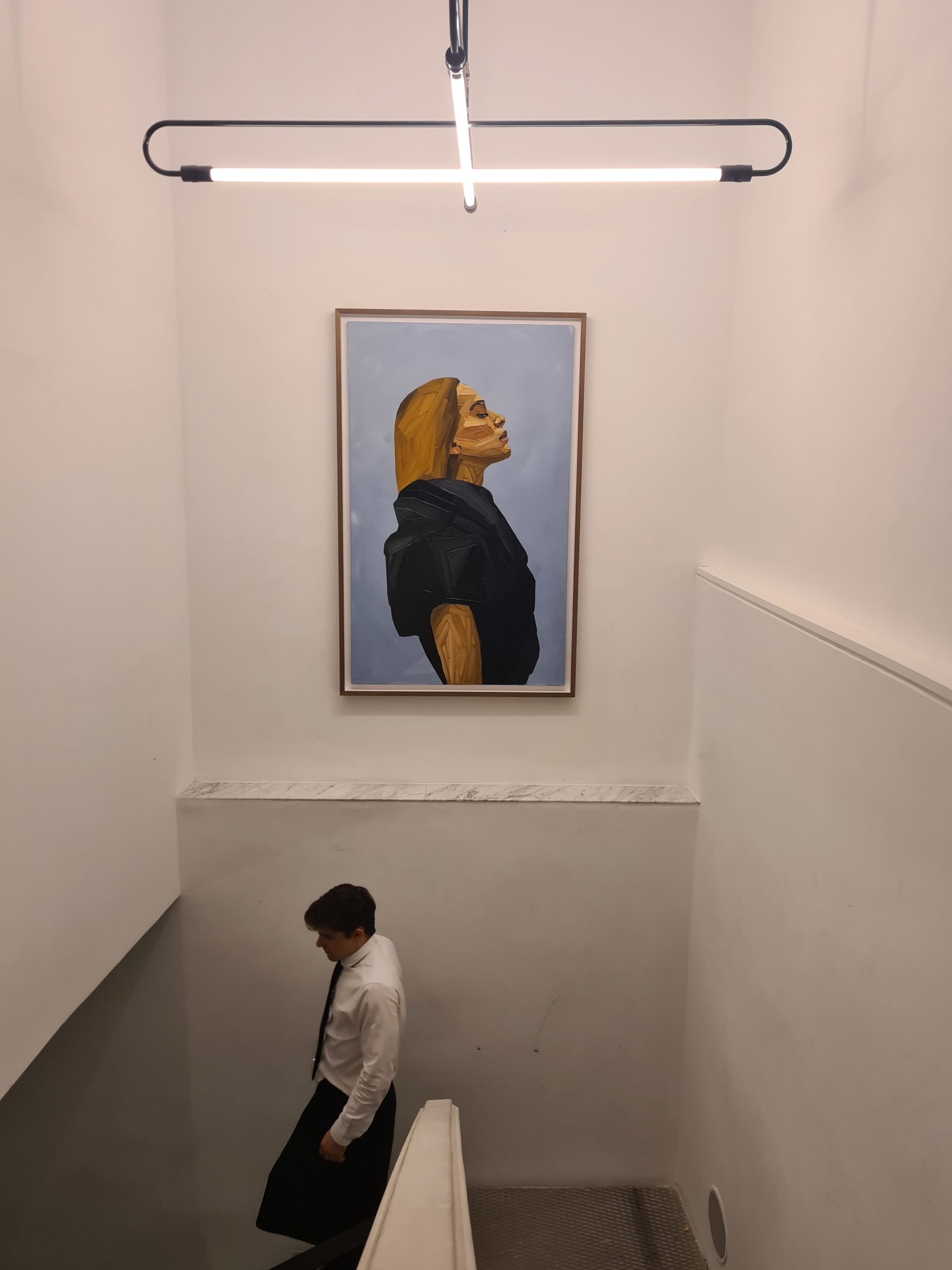
Elena Gual (1994) se formó como pintora clásica en la Academia de Arte de Florencia, seguida de prestigiosos cursos en la Central Saint Martin’s y la Royal Academy de Londres. Actualmente, Elena se mueve entre la capital Británica y Mallorca, donde también tiene su estudio, que la conecta con sus orígenes mediterráneos, reflejados en la luz y en los colores de sus pinturas. Desde un boceto al carbón, hasta trazos gruesos y expresivos sobre el lienzo, aplicados a través de la espátula. Elena encuentra una fuerte inspiración en las figuras femeninas que identifica mientras viaja por el mundo. Impulsada a destacar la belleza única, con lo natural del cuerpo y la ilustración femenina, crea vivos retratos de mujeres muy diversas.
Obra: Untitled.
Elena Gual (1994) trained as a classical painter at the Academy of Art in Florence, followed by prestigious courses at Central Saint Martin’s and the Royal Academy of Fine Arts, Florence, followed by prestigious courses at Central Saint Martin’s and the Royal Academy in London. Currently, Elena moves between the British capital and Mallorca, where she also has her studio, which connects her with her Mediterranean origins, reflected in the light and colors of her paintings. From a charcoal sketch, to thick and expressive strokes on canvas, applied with a palette knife. Elena finds strong inspiration in the female figures she identifies as she travels the world. Driven to highlight the unique beauty, the connaturalness of the the body and female illustration, she creates vivid portraits of very diverse women.
Artwork: Untitled.
LEONARDO RODRIGUEZ-PASTRANA
LEONARDO RODRIGUEZ-PASTRANA
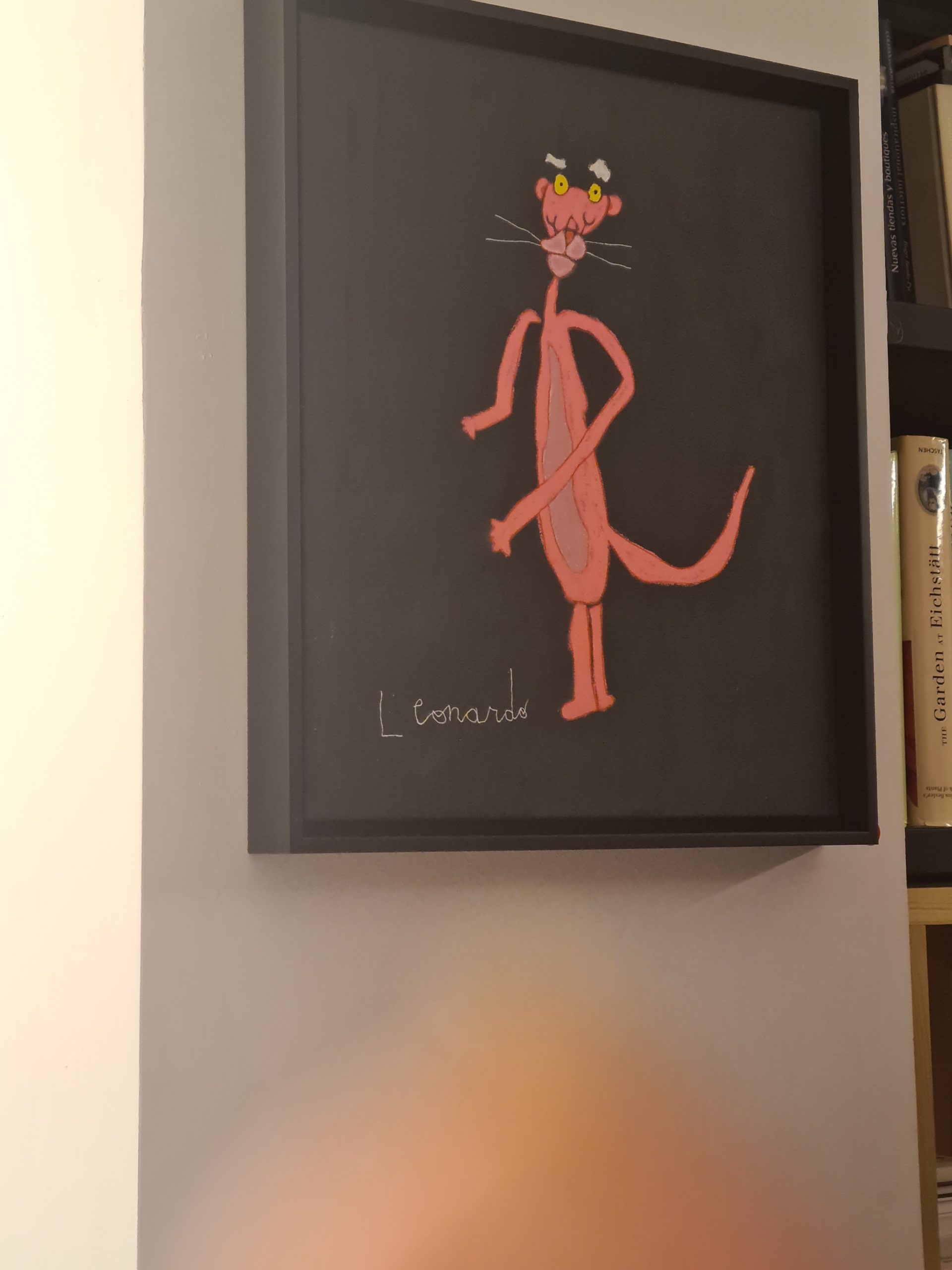
Leonardo Rodríguez-Pastrana Caldarola (2013) comenzó dibujando en los armarios de su casa con dos años y medio, ante lo que sus padres decidieron poner una pared de pizarra en su habitación para que diese rienda suelta a su creatividad. Después llegaron los lienzos, donde plasma desde animales, monstruos y héroes, a letras y números, todo a color, en gran formato y con diferentes técnicas. Su estilo recuerda al neo expresionismo de Basquiat gracias al uso y la mezcla de diferentes materiales, temáticas y técnicas, que conviven en sus obras. Realizó su primera exposición en 2017. Obra: La Pantera Rosa.
Leonardo Rodriguez-Pastrana Caldarola (2013) started drawing on the guns in his house when he was two and a half years old. His parents decided to put a blackboard wall in his room so that he could give free rein to his creativity. Then came the canvases, where he captures from animals, monsters and heroes, to letters and numbers, all in color, in large format and with different techniques. His style is reminiscent of Basquiat’s neo-expressionism thanks to the use and mixture of different materials, themes and techniques, which coexist in his works. He held his first exhibition in 2017. Artwork: Pink Panther.
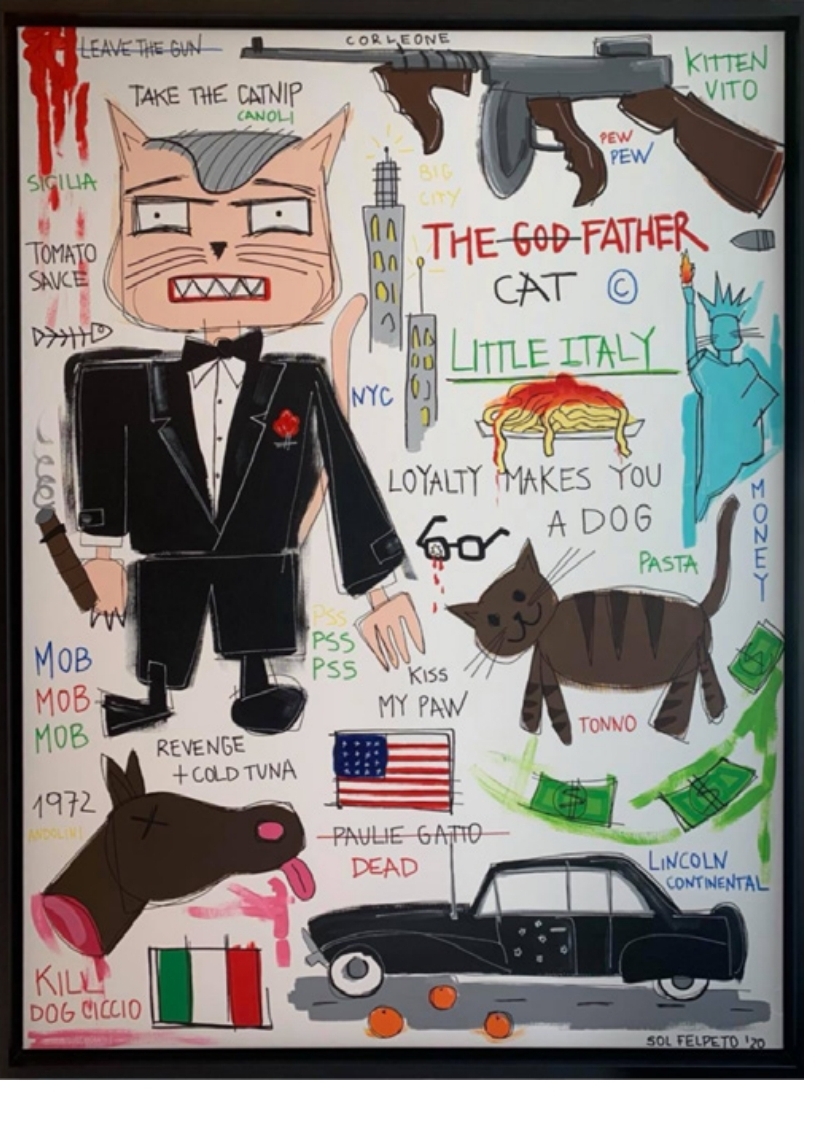
Sol Felpeto (Venezuela, 1990) pasó su infancia y adolescencia entre Buenos Aires y Madrid, pero también vivió esporádicamente en otros países con su familia.
En Argentina comenzó sus estudios en la facultad de medicina veterinaria, pero después de tres años decidió seguir su afán creativo y a los 21 años se trasladó definitivamente a España, donde estudió Moda y Dirección Creativa en el Instituto Europeo de Diseño (IED). Esos cuatro años de estudios creativos la llevaron a desarrollarse como ilustradora y pintora dentro de su propio estilo: una mezcla de arte, moda, humor y animales. Se graduó en junio de 2016 e inmediatamente participó en su primera exposición con otros artistas de la nueva generación.
Obra: The cat father.
Sol Felpeto (Venezuela, 1990) spent her childhood and adolescence between Buenos Aires and Madrid, but also lived sporadically in other countries with her family, but also lived sporadically in other countries with her family.
In Argentina she began her studies at the Faculty of Veterinary Medicine, but after three years she decided to follow her after three years, she decided to follow her creative zeal and at the age of 21 she moved permanently to Spain, where she studied Fashion and Creative Direction at the European Institute of Design (IED). Those four years of creative studies led her to develop as an illustrator and painter within her own style: a mix of art, fashion, humor and animals. She graduated in June 2016 and immediately participated in her first exhibition with other artists of the new generation. Artwork: The cat father..
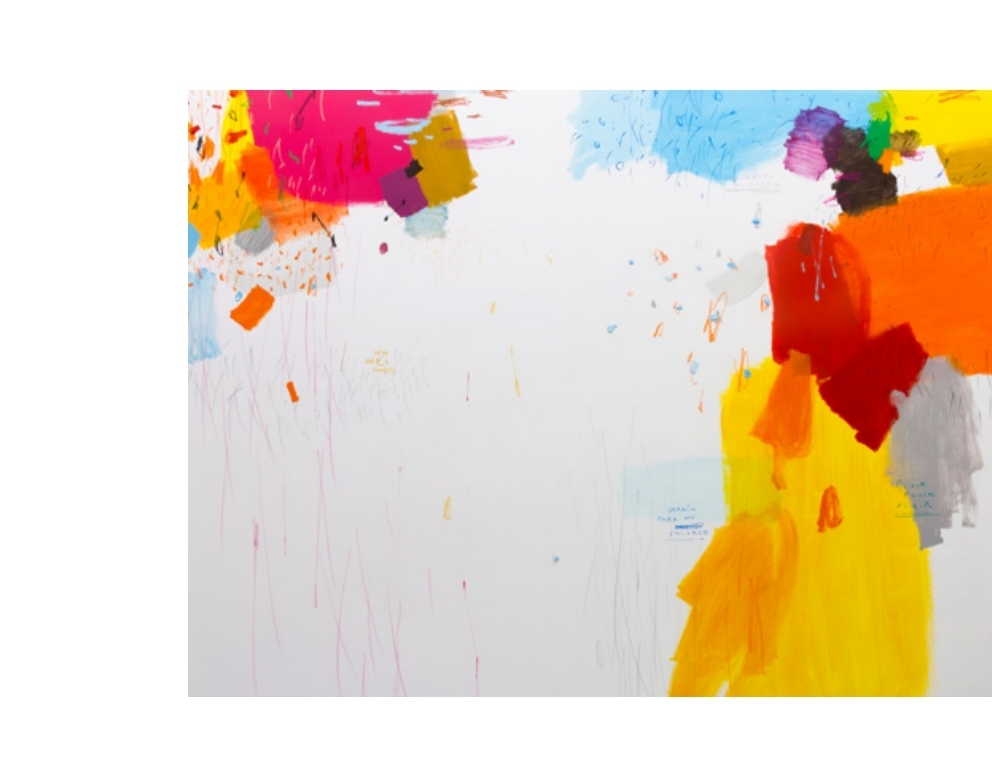
Martín de Lucas (1977) se licencia en 2002 como Ingeniero Civil por la Escuela Superior de Ingenieros de Caminos Canales y Puertos de la Universidad Politécnica de Madrid. Tras un largo viaje por India decide dedicarse por completo al arte sin llegar a ejercer nunca la ingeniería. En 2001 se convierte en uno de los cinco fundadores de Boa Mistura, un colectivo artístico multidisciplinar con raíces en el arte urbano con quien Rubén trabaja desde 2001 hasta 2015, realizando proyectos en Sudáfrica, España, Noruega, Alemania, Argelia, México y Brasil. En enero de 2015 comienza su andadura en solitario desarrollando un cuerpo de trabajo cuyo foco es el “paisaje y comportamiento asociado”. A través de proyectos se abordan temas como la paulatina reducción de espacio para la vida salvaje, la superpoblación, el carácter artificial de las fronteras, la naturaleza líquida del concepto nación o la dicotomía entre agricultura industrial y agricultura natural. Proyectos que conforman un discurso comprometido y crítico que nos invita a reconsiderar nuestra relación con el territorio. Obra: Jardín para un salvaje II.
Martín de Lucas (1977) graduated in 2002 as Civil Engineer from the Escuela Superior de Ingenieros de Caminos Canales y Puertos of the Universidad Politécnica de Madrid. After a long trip to India, he decided to dedicate himself completely to art without ever practicing engineering. In 2001 he became one of the five founders of Boa Mistura, a multidisciplinary artistic collective with roots in urban art with whom Rubén worked from 2001 to 2015, carrying out projects in South Africa, Spain, Norway, Germany, Algeria, Mexico and Brazil. In January 2015 he began his solo career developing a body of work whose focus is «landscape and associated behavior». Through projects he addresses issues such as the gradual reduction of space for wildlife, overpopulation, the artificial nature of borders, the liquid nature of the concept of nation or the dichotomy between industrial agriculture and natural agriculture. Projects that make up a committed and critical discourse that invites us to reconsider our relationship with the territory.
Artwork: Garden for a savage II
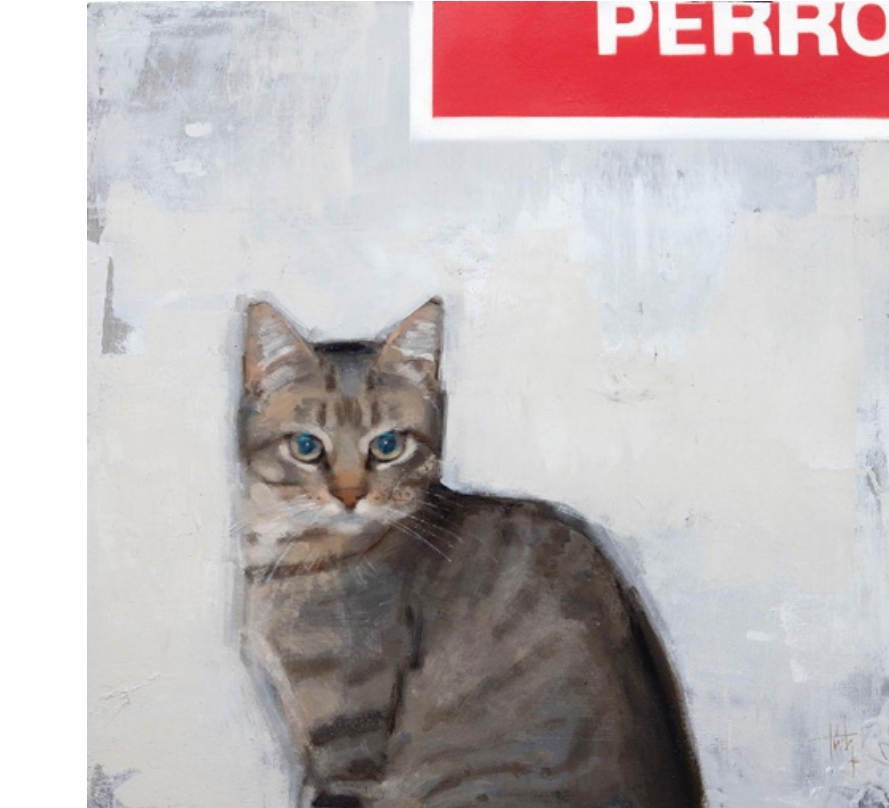
Madrid, 1976. Licenciado en Bellas Artes por la Universidad Complutense de Madrid. Compagina su obra pictórica con la escultórica, en ambos casos existen connotaciones mitológicas que hacen que las obras se llenen de dobles sentidos y de reinterpretaciones de escenas y objetos. Este hecho se hace especialmente evidente en su escultura, donde utiliza una idea preconcebida o un objeto asociado a un significado y le da la vuelta. Mitología revestida de ironía. Son piezas por lo general de pequeño formato, modeladas en resina y policromadas, aunque también hay obras ejecutadas en bronce. Sobre el lienzo intenta expresar la idea de la forma más directa posible, su técnica pictórica y el realismo empleado son cuidados, generando composiciones sencillas y rotundas en las que el vacío cobra un sentido y en muchos casos lleva el peso conceptual en un tratamiento del espacio que bebe directamente de la pintura abstracta. Es una figuración simbólica, con una serie de recursos que han ido enriqueciendo su propia iconografía. El título de cada una de las obras sugiere y refuerza la idea en muchas ocasiones, dejando siempre abierta la interpretación subjetiva del espectador.
Obra: Cuidado con el perro
Madrid, 1976. Degree in Fine Arts from the Complutense University of Madrid. He combines his pictorial work with sculpture, in both cases there are mythological connotations that mythological connotations that make the works are full of double meanings and reinterpretations of scenes reinterpretations of scenes and objects. This fact is especially evident in his sculpture, where he uses a preconceived idea or an object associated with a meaning and turns it around. Mythology coated with irony. They are generally small pieces, modeled in resin and polychrome, although there are also works executed in bronze. On the canvas he tries to express the idea in the most direct way possible, his pictorial technique and the realism used are careful, generating simple and emphatic compositions in which the emptiness takes on a meaning and in many cases carries the conceptual weight in a treatment of space that drinks directly from abstract painting. It is a symbolic figuration, with a series of resources that have been enriching his own iconography. The title of each of the works suggests and reinforces the idea on many occasions, always leaving open the subjective interpretation of the viewer.
Artwork: Beware of the dog