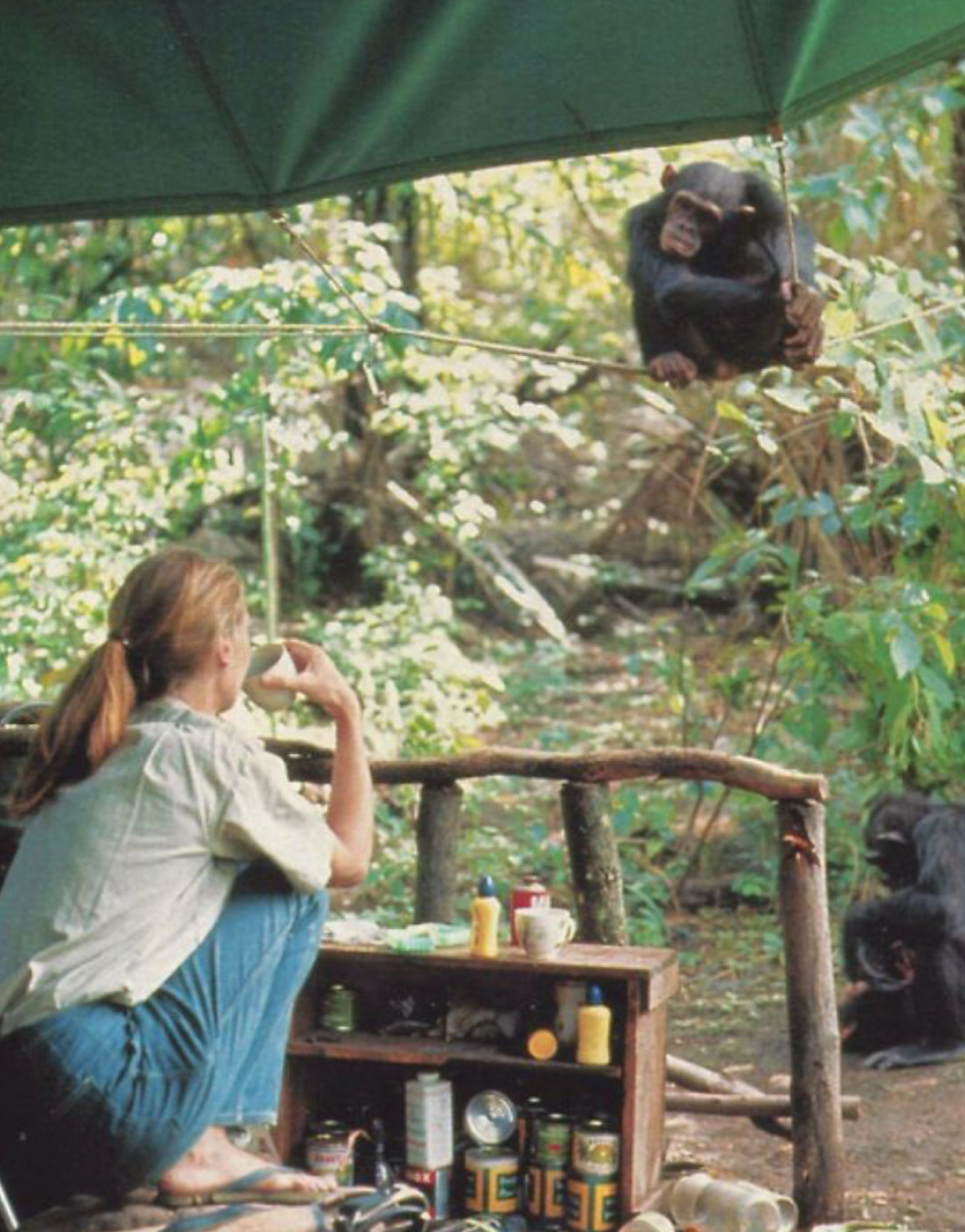
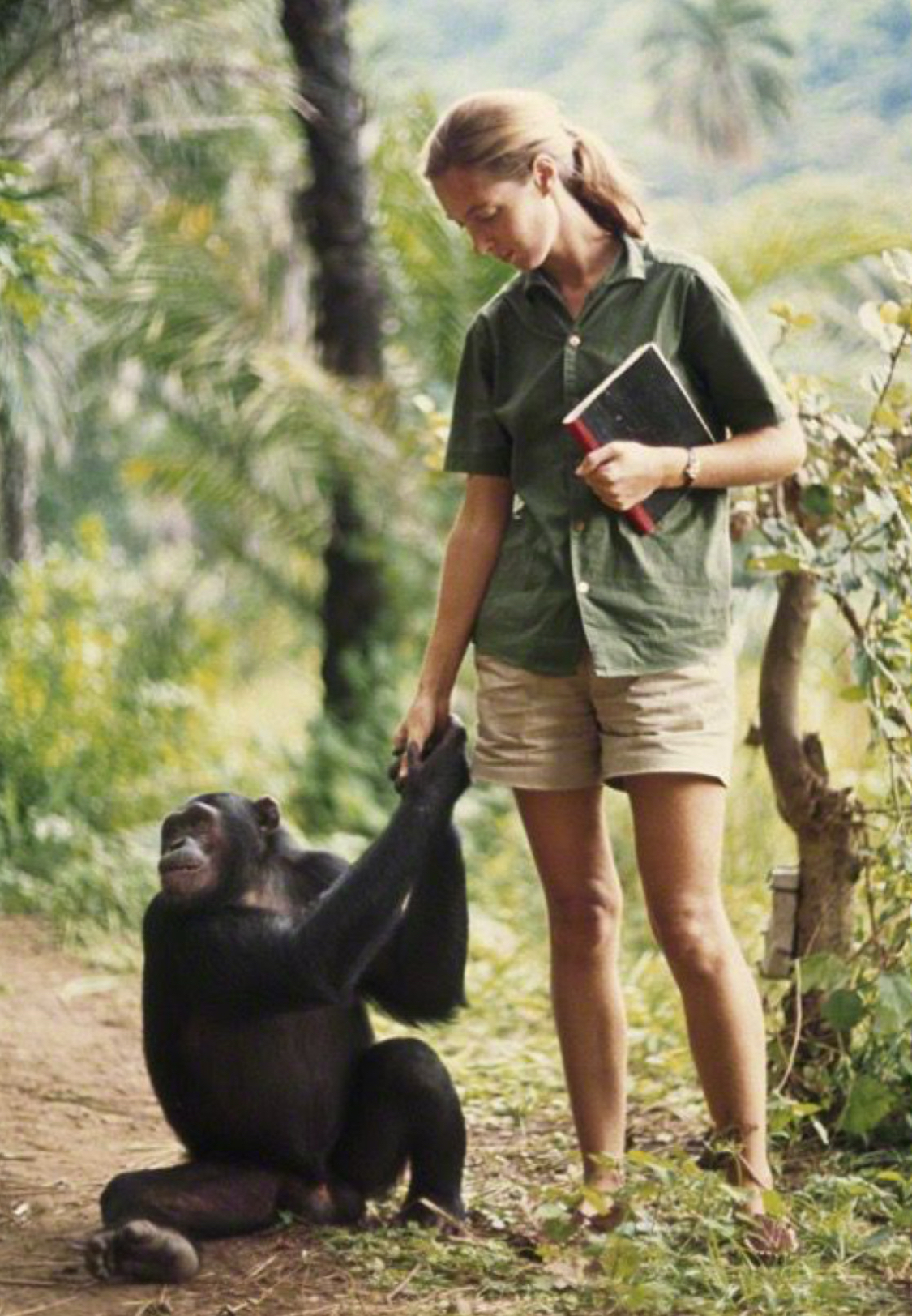
Jane Goodall (Londres, 1934 – Los Ángeles, 2025) fue una de las figuras más influyentes de la biología y la conservación contemporánea, cuyo trabajo revolucionó la etología y la forma en que entendemos la inteligencia y el comportamiento de los chimpancés. Su enfoque pionero, que combinaba observación directa, paciencia extrema y empatía hacia los animales, desafió los métodos tradicionales de la investigación científica y evidenció que los primates poseen emociones, relaciones complejas y capacidad para usar herramientas.
Más allá de sus hallazgos académicos, Goodall se convirtió en activista global, fundando el Jane Goodall Institute y el programa Roots & Shoots, movilizando a generaciones para la conservación ambiental y la defensa de los derechos de los animales. Su vida representa un puente entre la ciencia rigurosa y la ética de cuidado hacia la naturaleza, dejando un legado que sigue guiando tanto a investigadores como a ciudadanos comprometidos con el planeta.
Jane Goodall (London, 1934 – Los Angeles, 2025) was one of the most influential figures in contemporary biology and conservation, whose work revolutionized ethology and the way we understand the intelligence and behavior of chimpanzees. Her pioneering approach, combining direct observation, extreme patience, and empathy for animals, challenged traditional scientific research methods and showed that primates possess emotions, complex relationships, and the ability to use tools.
Beyond her academic achievements, Goodall became a global activist, founding the Jane Goodall Institute and the Roots & Shoots program, inspiring generations to engage in environmental conservation and animal welfare. Her life represents a bridge between rigorous science and an ethic of care for nature, leaving a legacy that continues to guide both researchers and citizens committed to the planet.
Jane Goodall nació en Londres el 3 de abril de 1934, y su infancia estuvo marcada desde los primeros años por una curiosidad insaciable hacia la vida natural. Mientras otros niños jugaban a soldados o seguían rutinas escolares estrictas, Jane se perdía observando aves, insectos y perros, registrando sus comportamientos en cuadernos y dibujándolos con precisión.
Su fascinación no era solo por la forma o el movimiento, sino por comprender la vida interior de cada criatura, imaginando emociones, relaciones y sentimientos que los adultos de su entorno no siempre reconocían. Su juguete de infancia, un pequeño chimpancé de peluche llamado Jubilee, se convirtió en un símbolo de esa pasión: un vínculo anticipado con los chimpancés que marcarían su vida, un recordatorio de que los animales eran compañeros de existencia y no simples sujetos de estudio.
Su infancia en Bournemouth consolidó esa relación profunda con la naturaleza, explorando campos, jardines y bosques, y sembrando las semillas de la ética de cuidado que guiaría cada paso de su trayectoria.
A pesar de las limitaciones económicas de su familia, Jane nunca abandonó su sueño de vivir cerca de los animales salvajes. Tras formarse como secretaria y trabajar en varios oficios, en 1957 viajó a Kenia con apenas 23 años, donde conoció a Louis Leakey, el paleontólogo que reconoció en ella un talento inusual para observar y conectar con los chimpancés.
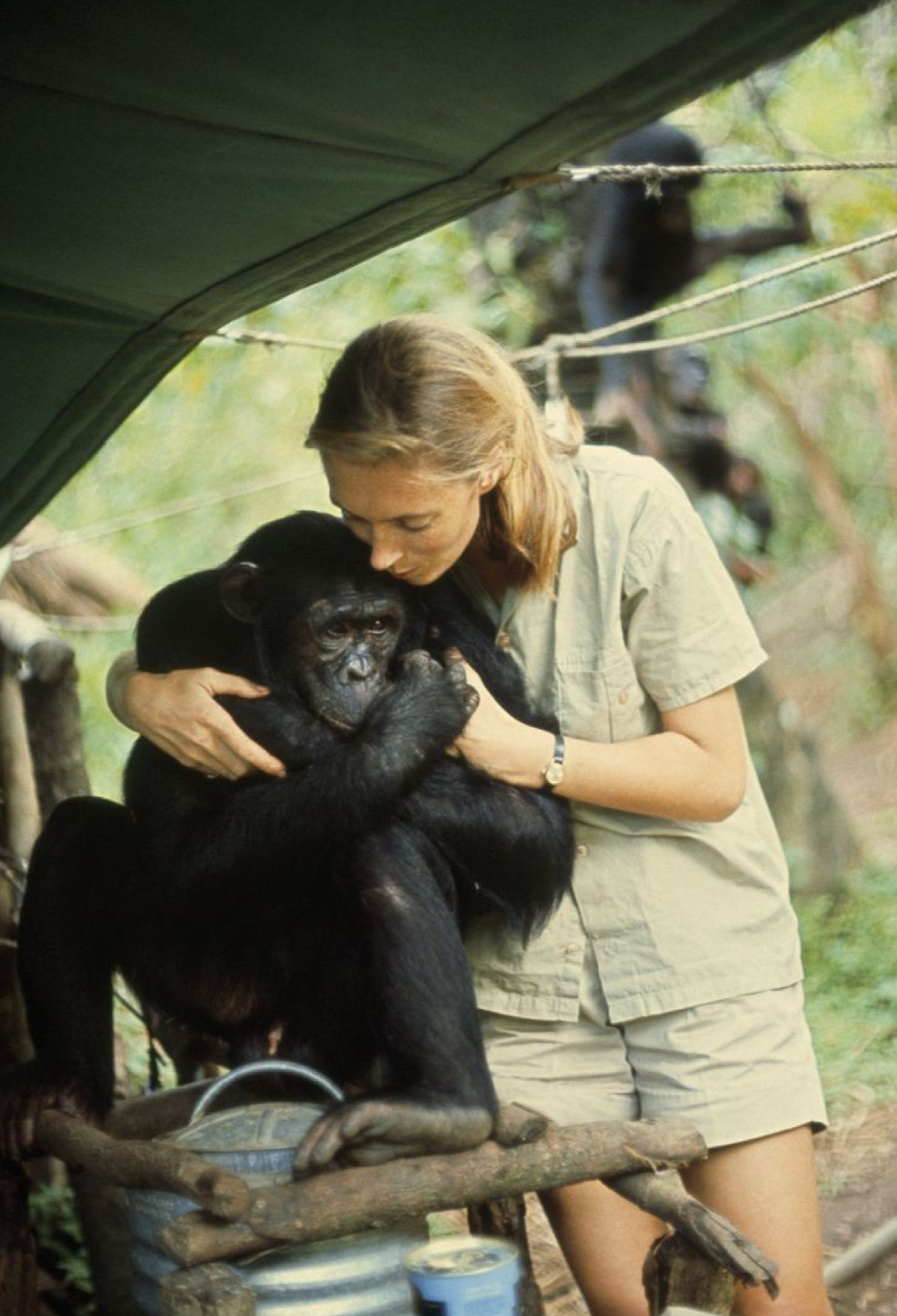
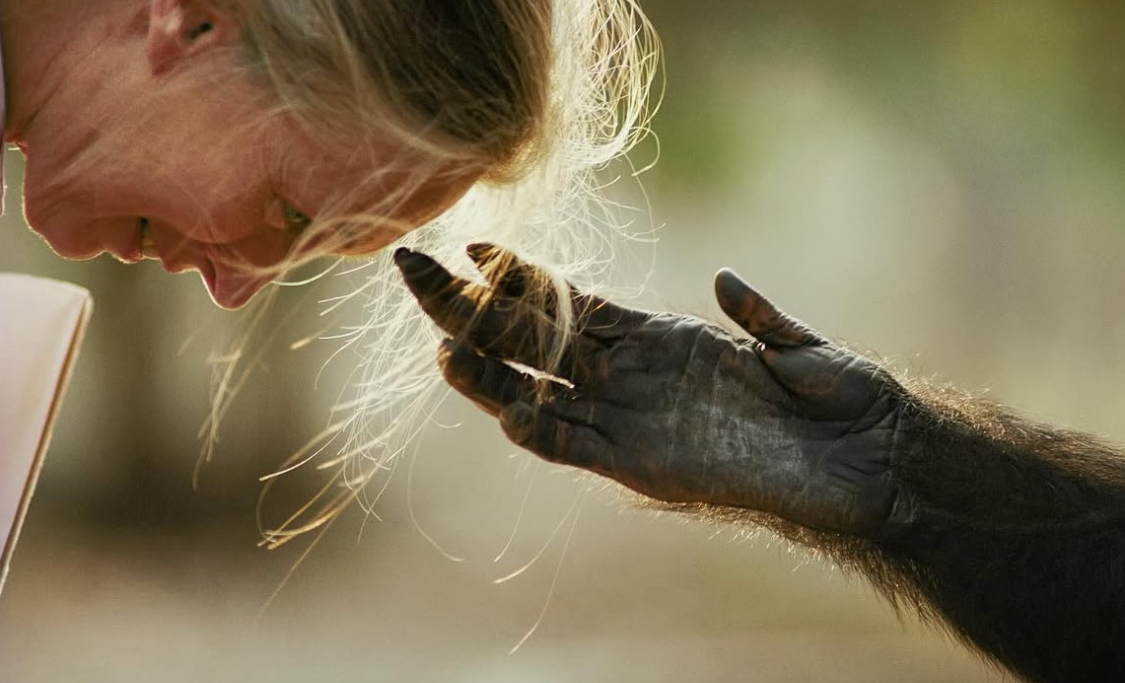
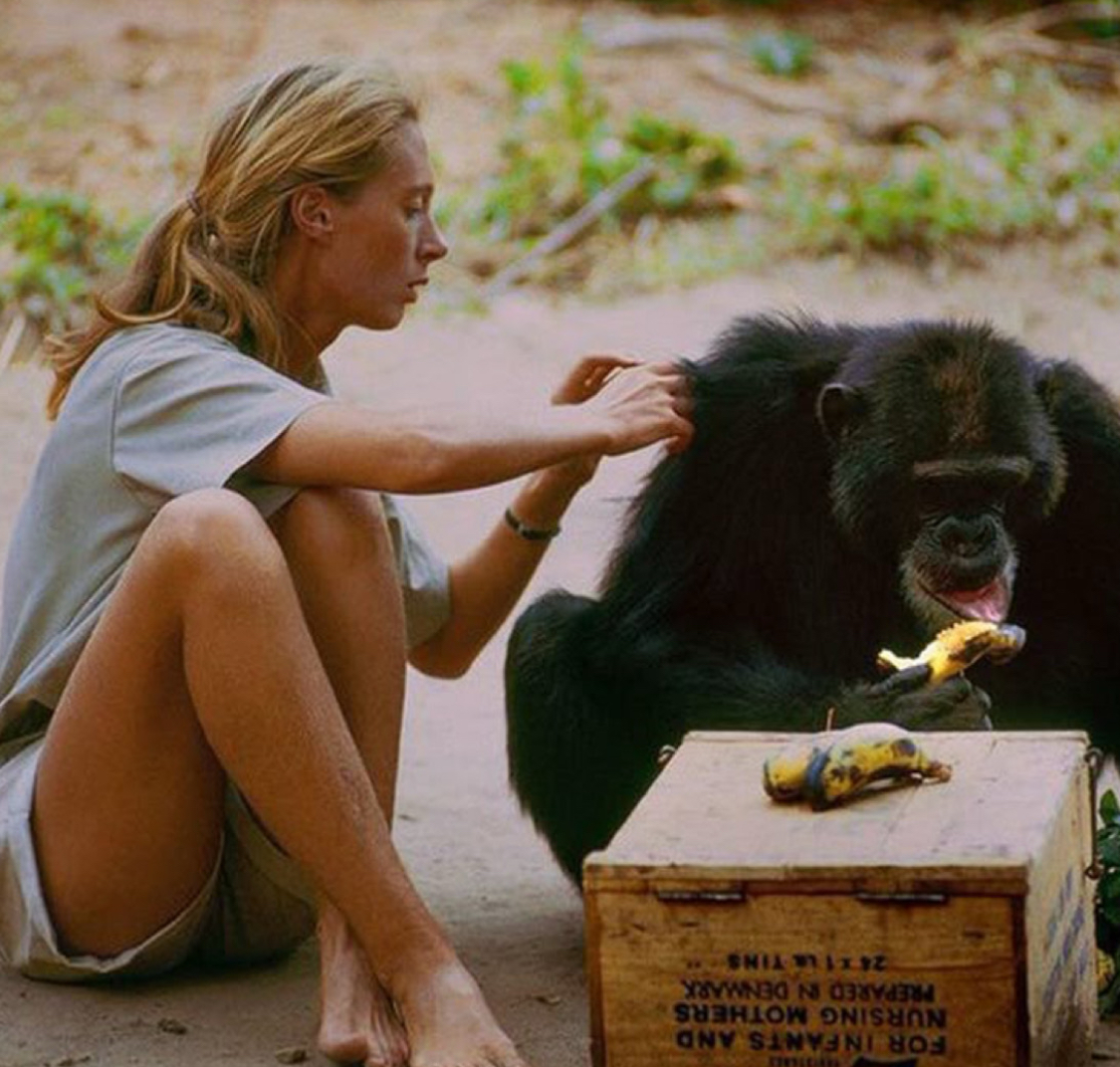
Gracias a su apoyo, Jane se trasladó en 1960 a la reserva de Gombe, en Tanzania, donde comenzó su investigación pionera. Allí, sola y sin formación universitaria formal, se enfrentó a la selva y al desafío de ganarse la confianza de los chimpancés uno a uno, día tras día. La paciencia, la empatía y el respeto fueron sus principales herramientas, y a través de ellas desarrolló un método de observación revolucionario que consideraba a los chimpancés como individuos con personalidad, emociones y vínculos sociales complejos, en lugar de sujetos pasivos de estudio.
Este enfoque no solo permitió descubrir nuevos comportamientos, sino que también transformó la manera en que la ciencia aborda la vida animal, demostrando que la investigación rigurosa puede coexistir con la ética y la compasión.
Jane Goodall was born in London on April 3, 1934, and her childhood was marked from an early age by an insatiable curiosity about the natural world. While other children played soldiers or followed strict school routines, Jane would lose herself watching birds, insects, and dogs, recording their behaviors in notebooks and drawing them with precision.
Her fascination was not only with their form or movement but with understanding the inner life of each creature, imagining emotions, relationships, and feelings that the adults around her did not always recognize. Her childhood toy, a small stuffed chimpanzee named Jubilee, became a symbol of that passion: an early bond with the chimpanzees that would shape her life, a reminder that animals were companions in existence, not merely subjects of study.
Her childhood in Bournemouth strengthened this deep connection with nature, exploring fields, gardens, and forests, and sowing the seeds of the ethic of care that would guide every step of her journey.
Despite her family’s financial limitations, Jane never gave up her dream of living close to wild animals. After training as a secretary and working in various jobs, in 1957, at the age of 23, she traveled to Kenya, where she met Louis Leakey, the paleontologist who recognized in her an unusual talent for observing and connecting with chimpanzees.
With his support, Jane moved in 1960 to the Gombe Stream Reserve in Tanzania, where she began her pioneering research. There, alone and without formal university training, she faced the jungle and the challenge of earning the chimpanzees’ trust one by one, day after day. Patience, empathy, and respect were her main tools, and through them, she developed a revolutionary method of observation that considered chimpanzees as individuals with personality, emotions, and complex social bonds, rather than passive subjects of study.
This approach not only allowed her to discover new behaviors but also transformed the way science approaches animal life, demonstrating that rigorous research can coexist with ethics and compassion.
En Gombe, Jane Goodall realizó descubrimientos que cambiaron para siempre la etología. Documentó comportamientos que hasta entonces se consideraban exclusivos de los humanos, como el uso de herramientas para alimentarse, la resolución de conflictos, la cooperación y la ternura en la crianza.
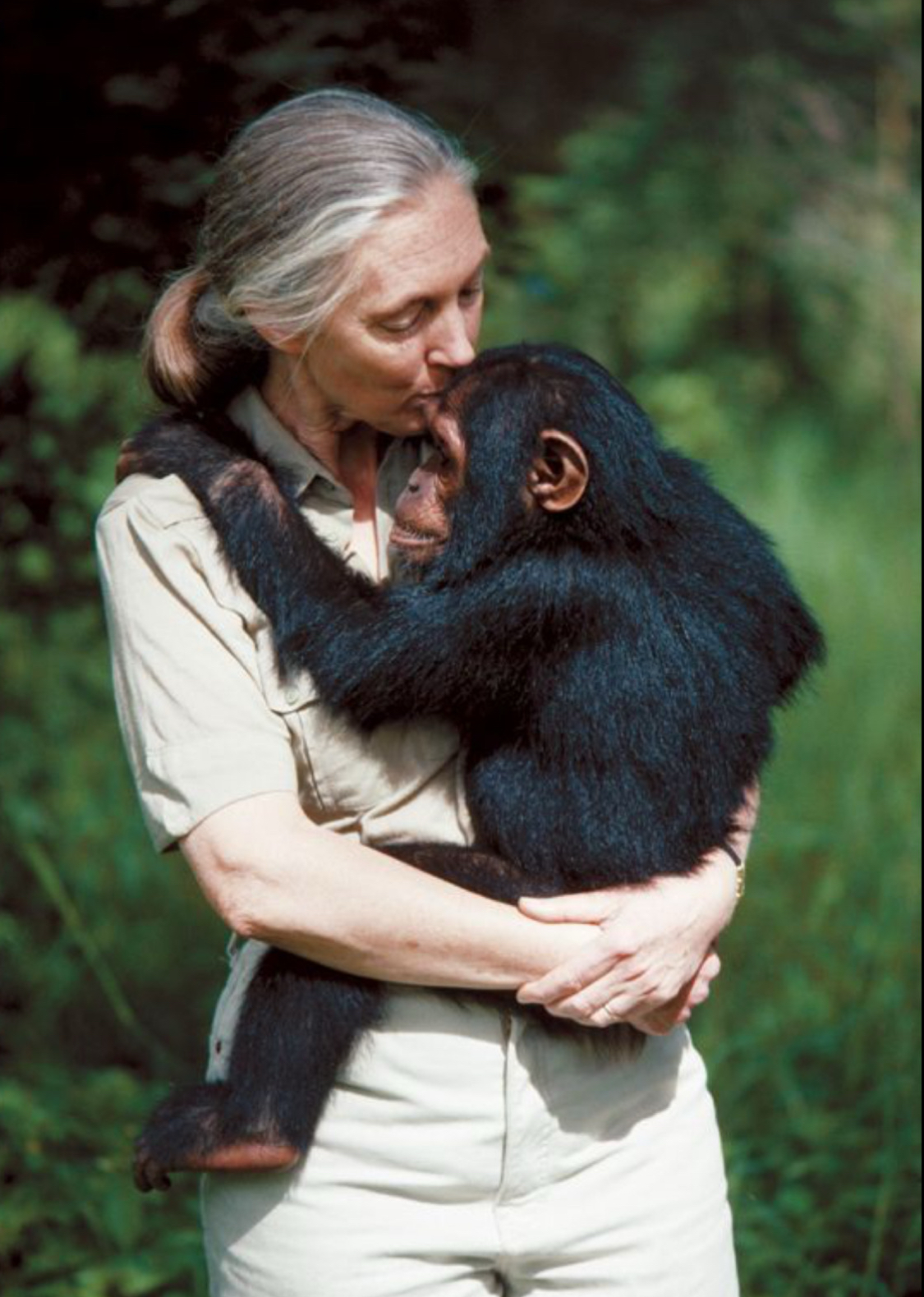
Cada chimpancé era reconocido por su nombre y sus particularidades; Jane describía sus emociones y relaciones como elementos esenciales de un sistema social complejo. Su enfoque supuso un cambio radical en la ciencia, no solo por los hallazgos técnicos, sino por la manera en que enseñó a la humanidad a comprender a los animales como seres sensibles. Cada paso de su trabajo reflejaba una combinación de rigurosidad científica y empatía radical, demostrando que la investigación puede ser al mismo tiempo profunda y profundamente humana.
Con el tiempo, Jane comprendió que observar y documentar no era suficiente. La selva le mostraba cada día la vulnerabilidad de los chimpancés y su hábitat: la deforestación, la caza furtiva y la presión humana sobre los ecosistemas eran amenazas constantes. Así nació su activismo global.
En 1977 fundó el Jane Goodall Institute, dedicado a la conservación y la educación ambiental, y en 1991 creó Roots & Shoots, un programa juvenil que moviliza a millones de jóvenes en todo el mundo para proteger los animales, cuidar el medio ambiente y fomentar la responsabilidad social. Durante décadas, recorrió continentes enteros, impartiendo conferencias y encuentros con líderes políticos, estudiantes y comunidades locales, con un mensaje constante: cada acción cuenta, cada persona puede marcar la diferencia.
Su vida demostró que la pasión y la coherencia pueden generar cambios tangibles, y que la investigación científica y el compromiso ético no solo son compatibles, sino complementarios.
At Gombe, Jane Goodall made discoveries that forever changed the field of ethology. She documented behaviors that had previously been considered uniquely human, such as the use of tools for feeding, conflict resolution, cooperation, and tenderness in parenting.
Each chimpanzee was recognized by name and individual traits; Jane described their emotions and relationships as essential elements of a complex social system. Her approach represented a radical shift in science, not only because of the technical findings but also because of the way she taught humanity to understand animals as sentient beings. Every step of her work reflected a combination of scientific rigor and radical empathy, demonstrating that research can be both profound and deeply humane.
Over time, Jane realized that observing and documenting was not enough. The jungle showed her daily the vulnerability of chimpanzees and their habitat: deforestation, poaching, and human pressure on ecosystems were constant threats. This understanding gave rise to her global activism.
In 1977, she founded the Jane Goodall Institute, dedicated to conservation and environmental education, and in 1991 she created Roots & Shoots, a youth program that mobilizes millions of young people worldwide to protect animals, care for the environment, and promote social responsibility. For decades, she traveled across continents, giving lectures and meeting with political leaders, students, and local communities, with a constant message: every action counts, and each person can make a difference.
Her life demonstrated that passion and consistency can generate tangible change, and that scientific research and ethical commitment are not only compatible but complementary.
En lo personal, Jane Goodall vivió con una coherencia admirable entre su filosofía y sus actos. Se casó en 1964 con el fotógrafo Hugo van Lawick, con quien tuvo a su hijo Hugo Eric Louis, y más tarde contrajo matrimonio con Derek Bryceson, director del parque Serengeti, quien falleció prematuramente.
A pesar de las pérdidas personales, nunca abandonó su propósito: su verdadera familia eran los chimpancés, los bosques y las comunidades que trabajaban por proteger la naturaleza. Recibió innumerables reconocimientos, entre ellos el título de Dame del Imperio Británico, la Medalla Presidencial de la Libertad y el nombramiento como Mensajera de la Paz de la ONU, pero siempre subrayó que su mayor logro era inspirar a otros a actuar, y que la esperanza era un deber, no un sentimiento.
Jane Goodall dedicó toda su vida a escuchar lo que los animales tenían que decirnos y a enseñarnos que nuestra existencia está inseparablemente ligada a la de todos los seres con los que compartimos este planeta. Su voz permanece en cada bosque protegido, en cada chimpancé rescatado y en cada joven que encuentra en la naturaleza una fuente de inspiración y compromiso.
Como ella misma decía:
“Lo que hacemos marca la diferencia, y tenemos que decidir qué tipo de diferencia queremos hacer”.
Jane Goodall nos enseñó a mirar con ternura radical, a cuidar de los animales y del planeta con responsabilidad, y a comprender que la vida no es un recurso para dominar, sino un vínculo que debemos proteger y honrar. Su historia seguirá guiando a generaciones enteras.
On a personal level, Jane Goodall lived with an admirable consistency between her philosophy and her actions. She married photographer Hugo van Lawick in 1964, with whom she had her son, Hugo Eric Louis, and later married Derek Bryceson, director of Serengeti National Park, who passed away prematurely.
Despite personal losses, she never abandoned her purpose: her true family was the chimpanzees, the forests, and the communities working to protect nature. She received countless honors, including the title of Dame of the British Empire, the Presidential Medal of Freedom, and the designation as a UN Messenger of Peace, but she always emphasized that her greatest achievement was inspiring others to act, and that hope is a duty, not just a feeling.
Jane Goodall dedicated her life to listening to what animals have to tell us and to teaching that our existence is inseparably linked to that of all the beings we share this planet with. Her voice remains in every protected forest, in every rescued chimpanzee, and in every young person who finds inspiration and commitment in nature.
As she herself said:
“What you do makes a difference, and you have to decide what kind of difference you want to make.”
Jane Goodall taught us to look with radical tenderness, to care for animals and the planet responsibly, and to understand that life is not a resource to dominate, but a bond to protect and honor. Her story will continue to guide generations to come.