
En el año 1966, IBM cedió una computadora al centro de cálculo de la Universidad de Madrid. Utilizando esta nueva herramienta, el arquitecto José Miguel de Prada Poole pudo construir un artefacto deformable capaz de aprender y responder frente a cualquier acción exterior, cambiando sus constantes interiores. Sirvió de modelo para la estructura neumática del pabellón de Expoplástica 69 (1968 -1969), que se celebró en el Paseo de la Castellana de Madrid. En la imagen, De Prada Poole dentro del segundo prototipo de este modelo con doble membrana. AD MAGAZINE + © Archivo J. M. de Prada Poole
Prada Poole – POMPAS DE PAPEL
Article 31.07.24
Rosana Pérez
Rosana Pérez
José Miguel de Prada Poole, winner of the National Architecture Prize in 1975 (Valladolid 1938- Madrid 2021) Was a different kind of architect. Architect of a dream world, idyllic utopias, visionary theorist and builder of unique works that he called capable of vanishing like soap bubbles. 50 years after the publication of the essay “La arquitectura perecedera de las pompas de jabón”, his incredible archive has just been donated to the Reina Sofía Museum in Madrid.
José Miguel de Prada Poole, premio Nacional de Arquitectura en 1975. (Valladolid 1938- Madrid 2021) Fue un arquitecto diferente. Artista de un mundo de ensueño, utopías idílicas, teórico visionario y constructor de obras únicas que denominaba como capaces de desvanecerse como las pompas de jabón. 50 años de la publicación del ensayo “La arquitectura perecedera de las pompas de jabón”, Su increíble archivo acaba de ser donado al Museo Reina Sofía de Madrid.
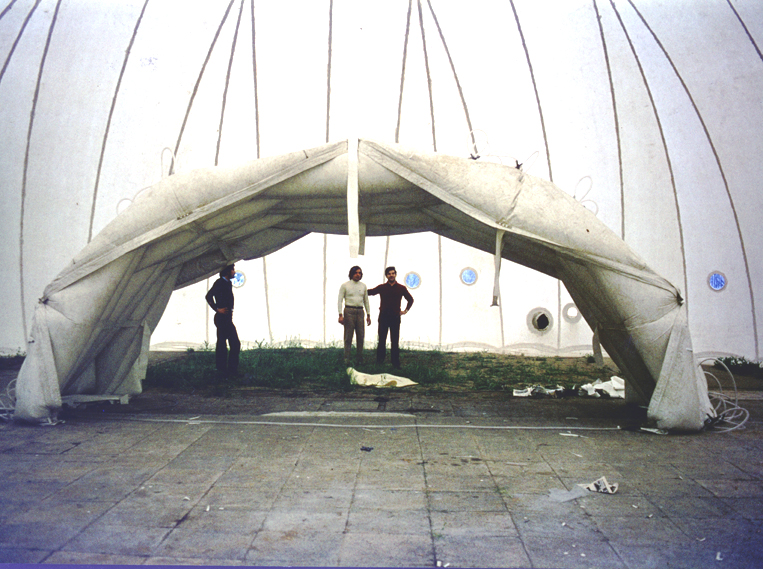
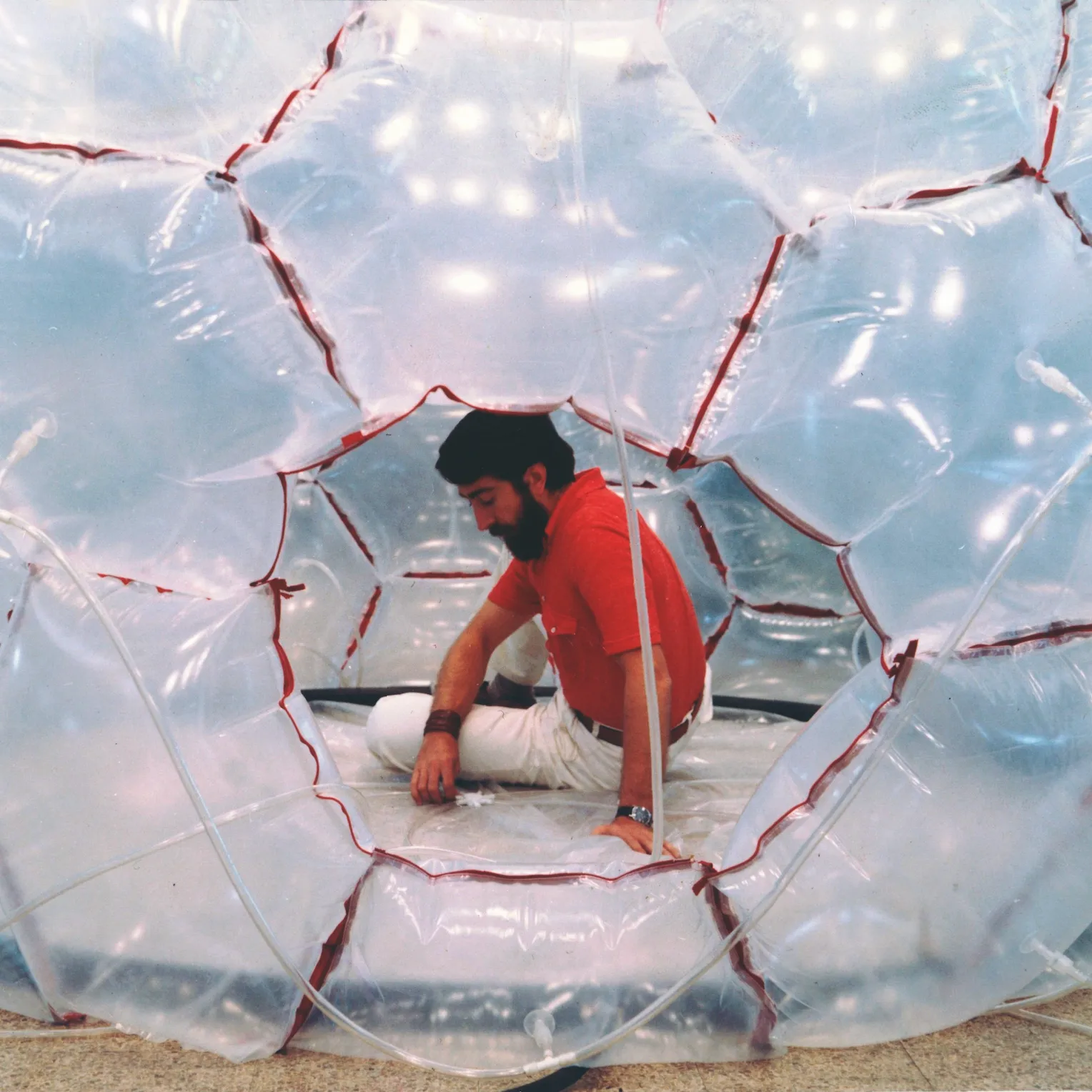
In 1966, IBM loaned a computer to the calculation center of the University of Madrid. Using this new tool, the architect José Miguel de Prada Poole was able to build a deformable artifact capable of learning and responding to any external action, changing its internal constants. It served as a model for the pneumatic structure of the Expoplástica 69 pavilion (1968-1969), which was held on the Paseo de la Castellana in Madrid. In the picture, De Prada Poole inside the second prototype of this model with double membrane. AD MAGAZIN + © Archivo J. M. de Prada Poole
José Miguel de Prada Poole
José Miguel de Prada Poole
Buscaba “algo”en lo que me gustara escribir un articulo que quizás mostrara la imaginación que guarda la mente del artista, me he encontrado por casualidad con un grande: José Miguel de Prada Poole. Demasiado top.
Una persona que buscó hacer algo distinto, un mundo que te conectara más con el inconsciente y el Universo avanzado; ese que sale en las películas… planos distintos y bilaterales que con ellos se sumergía en su propio espacio. Pero, algo que solo el esbozaba al abrir los ojos llevándolo a la realidad. Un artista que fue un avanzado a su tiempo, e incluso a los nuestros actúales. Materiales distintos, formas diferentes, texturas o colores… hasta donde llegan la infinidad de nuestras mentes. Mi padre decía quién deja el mensaje en quienes escriben esas historias.
El arte se guarda bajo llave y así lo hacemos único. Justo pensaba el otro día en la expo de 92 de Sevilla al ver la inauguración de las Olimpiadas de París 2024. No hay mayor arte que llenarlo todo de tanta iconografía y no saber bien qué nos están mostrando… Pero, sin duda está lleno de significado. A mi me enseñaron a leer cuadros e interpretar pinturas, pero cuando enseñas a leer tu propio mensaje y comunicarlo con el público, marcas la diferencia como individuo.
En los años 70; JM de Prada Poole ya focalizaba visibilidad a temas importantes como sostenibilidad, reciclaje y ahorro energético. Un avanzado sin lugar a dudas que quería y creía en un mundo más dulce para todos.
La revista AD anuncia que el Museo Reina Sofía ya expone las maquetas más espectaculares del artista. Obras, como: El Palenque, diseñado para la Expo 92 de Sevilla, derribado en 2007. O cómo una cubierta transparente suspendida de mástiles de 35 metros de altura con mil quinientas boquillas que pulverizaban aire fresco se convirtió en uno de los edificios más relevantes de nuestra historia reciente… y, de paso, en el proyecto preferido de Miguel Segade, director del museo. Un bonito detalle, el poder darle el valor que se merece, otorgándole: visibilidad y reconocimiento a un artista de está magnitud.
I was looking for something in which I would like to write an article that would show the imagination that keeps the mind of the artist, I have found José Miguel de Prada Poole. Too much.
Someone who sought to do something different, a world that would connect you more with the unconscious and the advanced Universe that appears in the movies than with the one he saw when he opened his eyes, bringing it to reality. An artist who was ahead of his time, and even ahead of ours today. Different materials, different shapes, textures or colors… as far as the infinity of our minds can reach.
Art is kept under lock and key and that’s how we make it unique, I was just thinking the other day at the Expo 92 in Seville, watching the inauguration of the Paris 2024 Olympics. There is no greater art than filling everything with so much iconography and not knowing what they are showing us. I was taught to read paintings, but when you teach how to read your own message and communicate it to the public, it makes all the difference as a person. In the 1970s, he already gave visibility to important issues such as sustainability, recycling and energy saving.
Ad magazine announces that the Reina Sofia Museum is already exhibiting the artist’s most spectacular models. Works such as: The Palenque, designed for Expo 92 in Seville and demolished in 2007. Or how a transparent roof suspended from masts 35 meters high with fifteen hundred nozzles that sprayed fresh air became one of the most important buildings in our recent history … and, incidentally, in the favorite project of Miguel Segade, director of the museum. It is really amazing that an artist of this magnitude is given visibility.
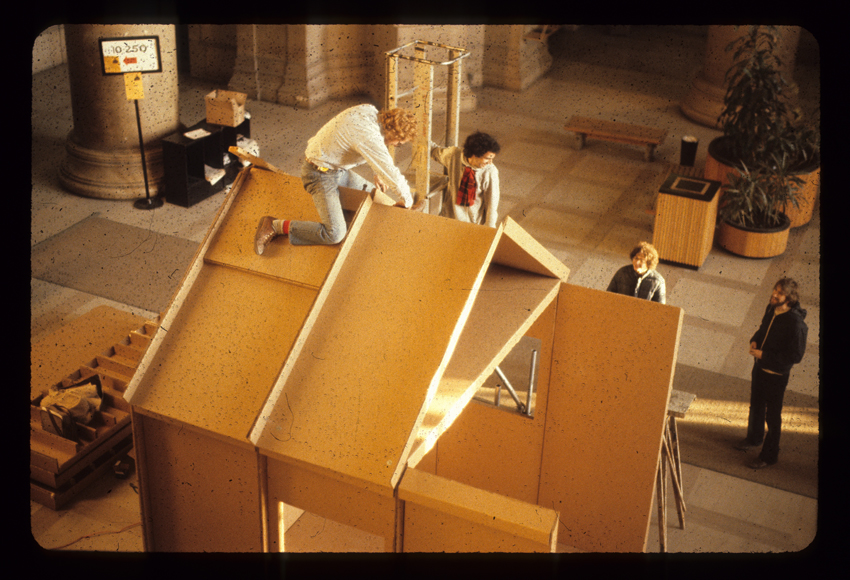
Casas de papel en el MIT. © Archivo J. M. de Prada Poole
Paper houses at MIT. © J. M. de Prada Poole Archive
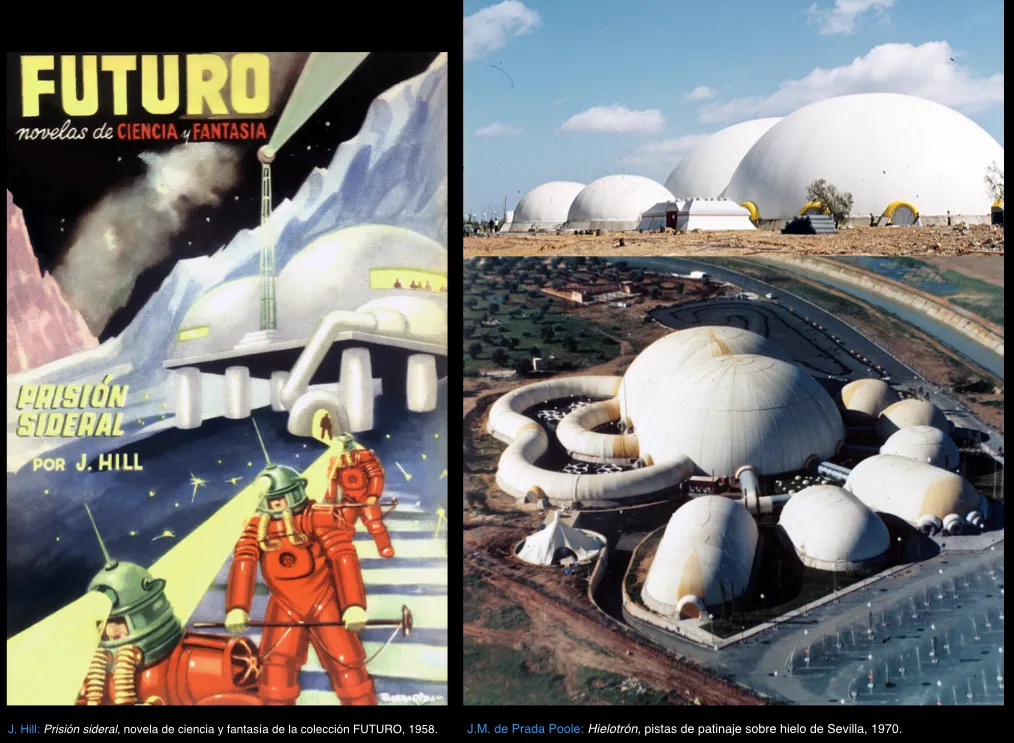
“De niño leía novelas de bolsillo de ciencia ficción, en particular, la colección Futuro. Di con un coleccionista que me pasó digitalizadas todas las novelas. En la portada del número 2 de la colección, del año 1953, se ve una prisión sideral… que recuerda al Hielotrón. Su arquitectura sintetiza el optimismo y la fantasía, pero desde una base científica total”, revela Antonio Cobo, alumno, amigo y, hasta hace muy poco, gestor del archivo de José Miguel de Prada Poole. AD MAGAZINE+© Archivo J. M. de Prada Poole
“As a child I used to read science fiction paperback novels, in particular the Futuro collection. I found a collector who gave me digitized copies of all the novels. On the cover of number 2 of the collection, from 1953, you can see a sidereal prison… reminiscent of the Icetron. Its architecture synthesizes optimism and fantasy, but from a total scientific basis”, reveals Antonio Cobo, student, friend and, until very recently, manager of the archive of José Miguel de Prada Poole. AD MAGAZIN +© J. M. de Prada Poole Archive
“Toda la historia de la construcción, (el aspecto más material de la arquitectura) es la historia de la conquista o de la ascensión, peldaño a peldaño a través de estos cuatro elementos o estadios. De la dualidad aislamiento-contacto. De una relación que nos hace ver la contradictoria necesidad de un estar integrado en la naturaleza pero a la vez separado de ella.” Prada Poole. Hacia la Ciudad del siglo XXI
“The whole history of construction, (the most material aspect of architecture) is the history of the conquest or the ascent, rung by rung through these four elements or stages. Of the duality isolation-contact. Of a relationship that makes us see the contradictory necessity of a being integrated in nature but at the same time separated from it.” Prada Poole. Towards the City of the 21st Century
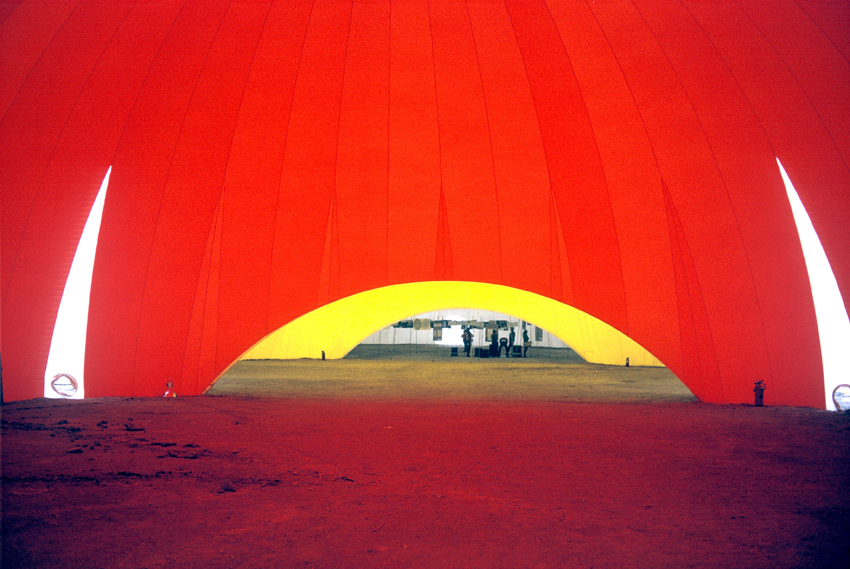
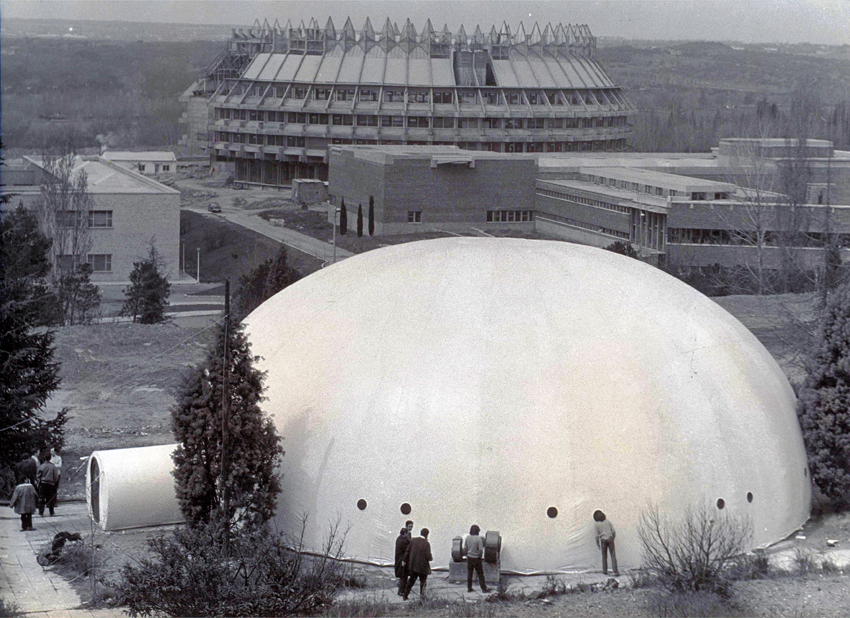
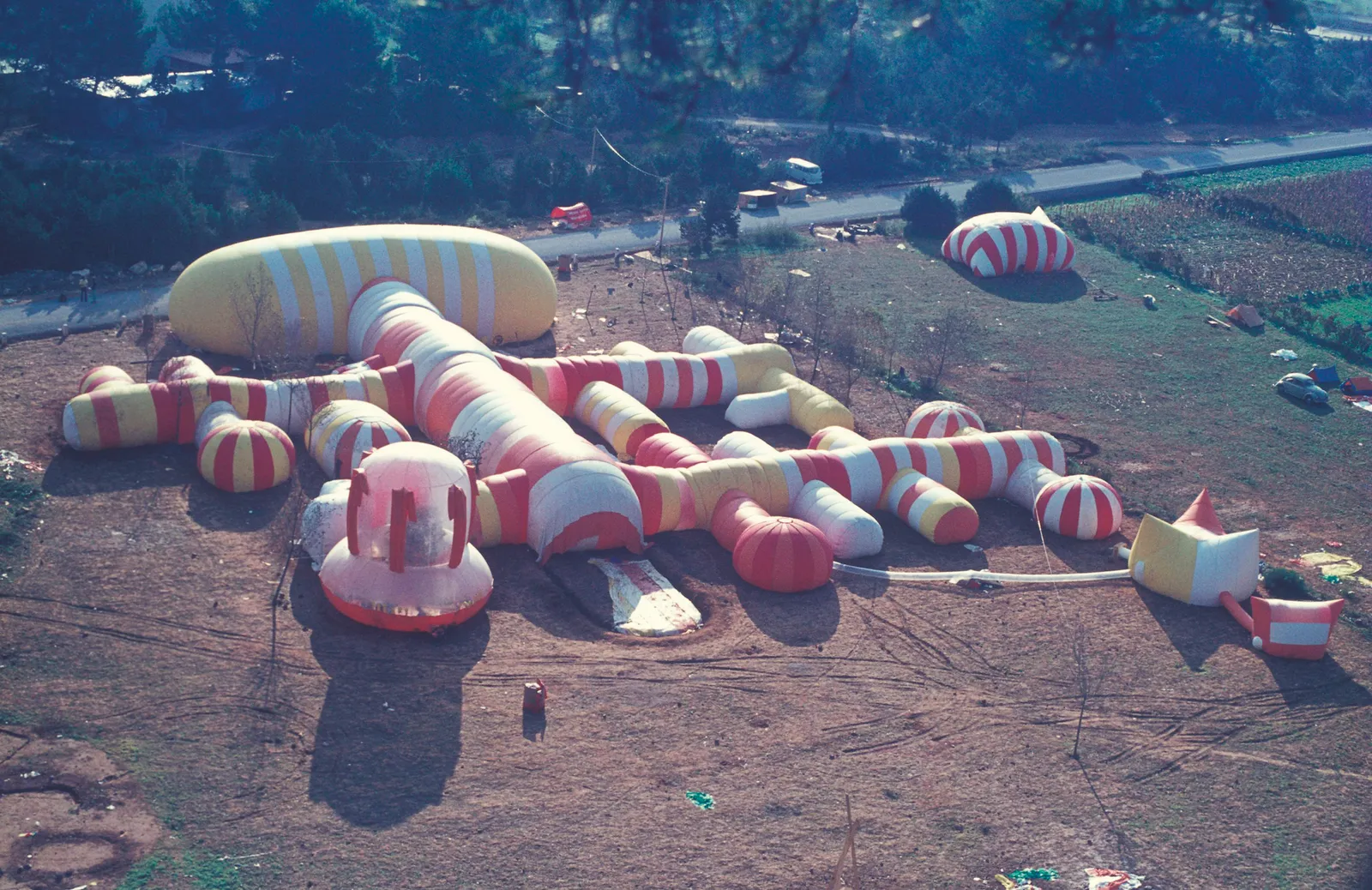
Nave para los Encuentros de Pamplona + Elelipsoide. © Archivo J. M. de Prada Poole
Nave for the Pamplona Los Encuentrps + Elelipsoide. © J. M. de Prada Poole Archive
“Nuestro narrador explica que esta ciudad en realidad es la Isla de S. Borondón, que por una peculiar y misteriosa circunstancia, que no nos quiere aclarar, en vez de aparecer flotando sobre el agua ha preferido colgarse de las nubes boca abajo, para indicarnos algo, que si fuéramos lo suficientemente avisados, alcanzaríamos inmediatamente a comprender.” Prada Poole. La Ciudad invertida.
“Our narrator explains that this city is in reality the Island of S. Borondón, which by a peculiar and mysterious circumstance, which he does not want to clarify, instead of appearing floating on the water has preferred to hang upside down from the clouds, to indicate something to us, that if we were sufficiently forewarned, we would immediately reach to understand.” Prada Poole. The Inverted City.
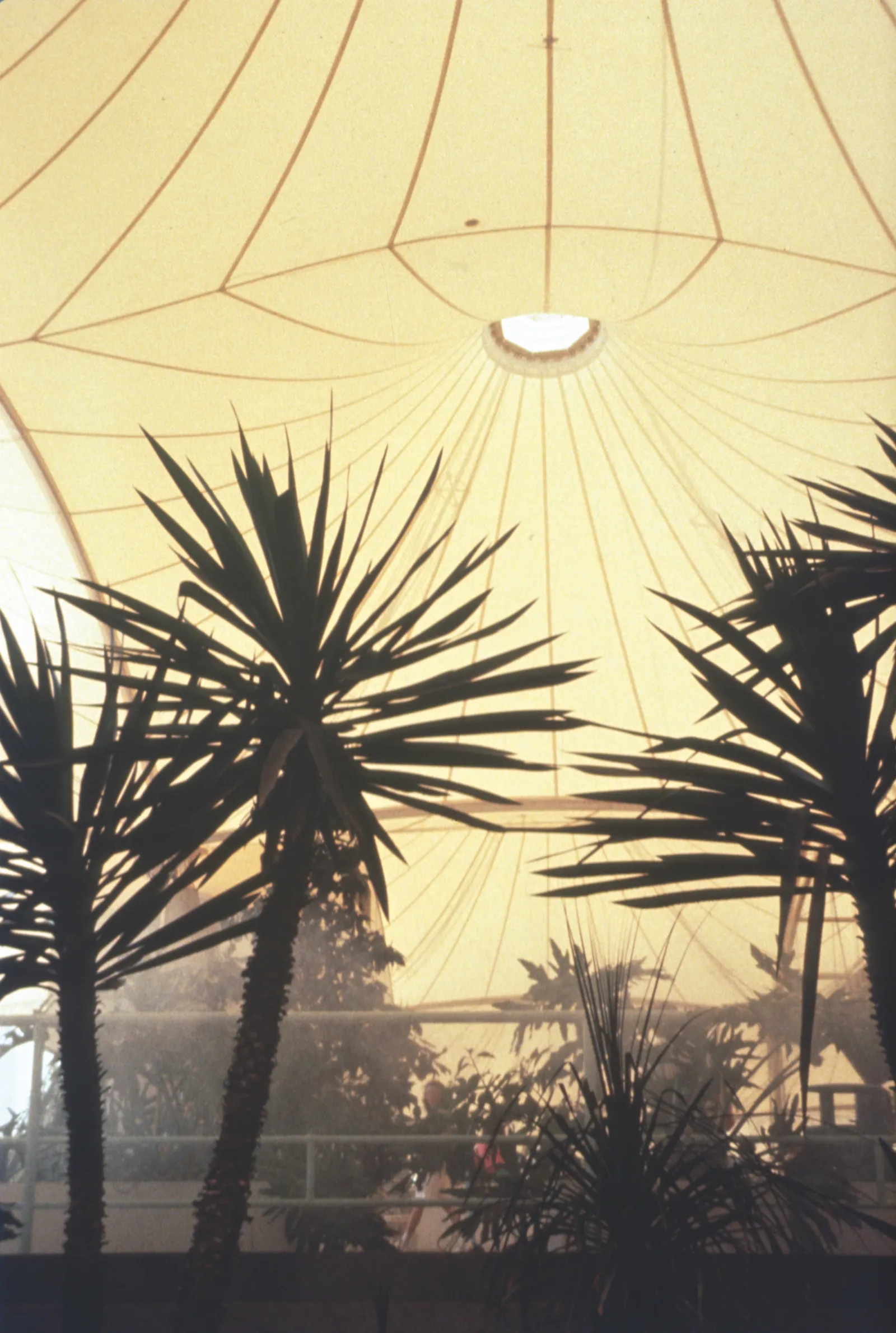
Vista interior de El Palenque, proyecto para la Expo 92 de Sevilla. Este espacio estuvo dedicado a actos protocolarios y actuaciones y que presentó un tecnología de climatización muy innovadora para la época. En 2007, se desmontó —decisión muy criticada por defensores del patrimonio y el propio arquitecto, que pidieron la declaración de El Palenque como Bien de Interés Cultural. El terreno ahora está ocupado por un bloque de oficinas. AD MAGAZINE + © Archivo J. M. de Prada Poole
Interior view of El Palenque, a project for Expo 92 in Seville. This space was dedicated to protocol acts and performances and presented a very innovative air conditioning technology for the time. In 2007, it was dismantled -a decision highly criticized by heritage advocates and the architect himself, who called for the declaration of El Palenque as an Asset of Cultural Interest. The land is now occupied by an office block. AD MAGAZINE + © Archivo J. M. de Prada Poole
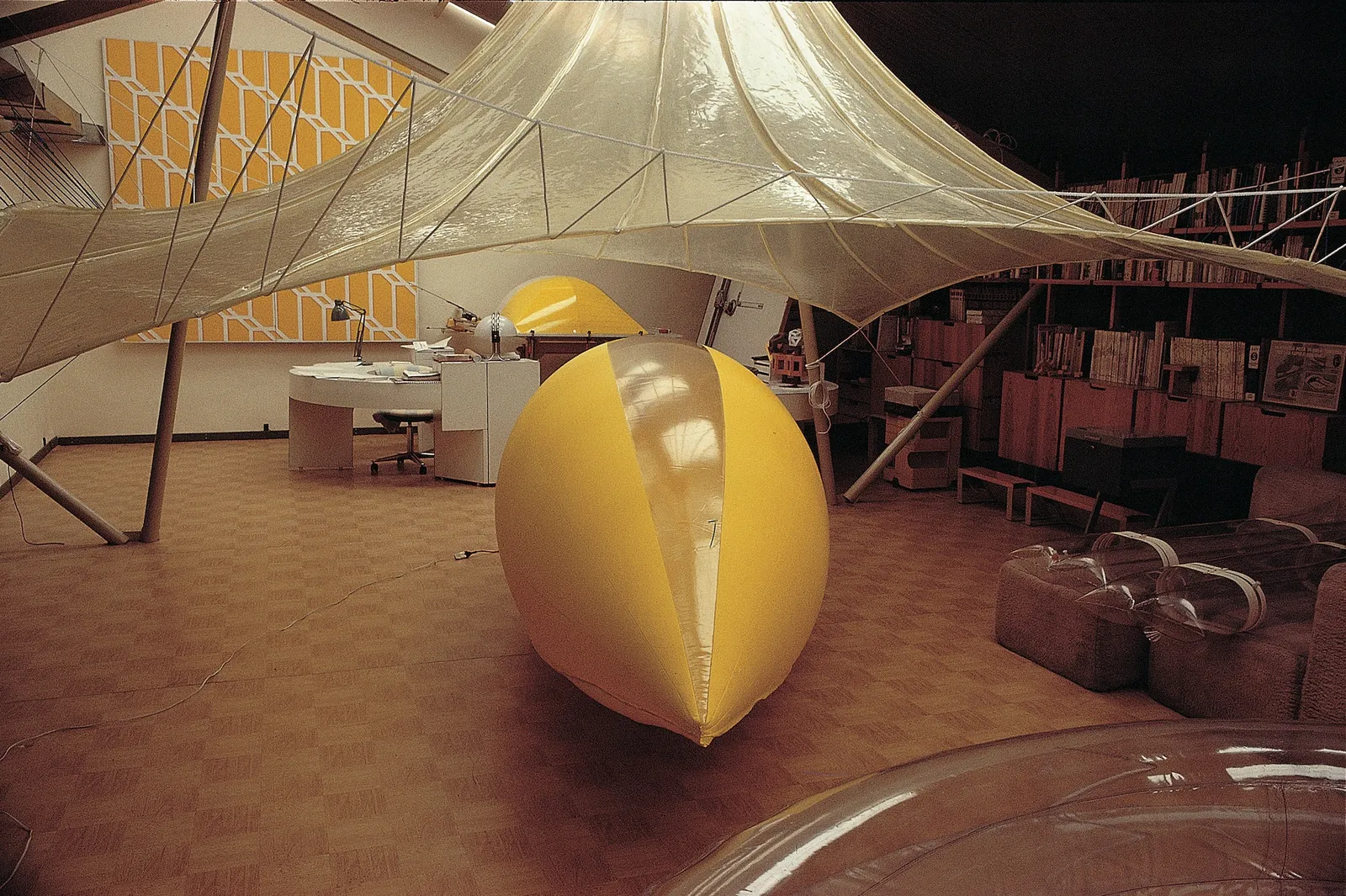
El estudio de José Miguel de Prada Poole en Madrid, en la buhardilla de su vivienda, en un edificio proyectado por él mismo junto a Ricardo Aroca, Emilia Bisquert y Carmen González Lobo. La casa se ubica en la zona de Arturo Soria, Madrid. Sus hijos, tal y como han contado a AD, le recuerdan “todo el día ahí arriba, trabajando y leyendo”.© Archivo J. M. de Prada Poole
The studio of José Miguel de Prada Poole in Madrid, in the attic of his home, in a building designed by himself together with Ricardo Aroca, Emilia Bisquert and Carmen González Lobo. The house is located in the area of Arturo Soria, Madrid. His children, as they told AD, remember him “all day long up there, working and reading”.© Archivo J. M. de Prada Poole
CREDITS
Fotografía del archivo JOSÉ MIGUEL DE PRADA POOLE + AD MAGAZINE (SOMEONE WORDS)
BY ROSANA PÉREZ
*El año 1958 nunca falla ✨