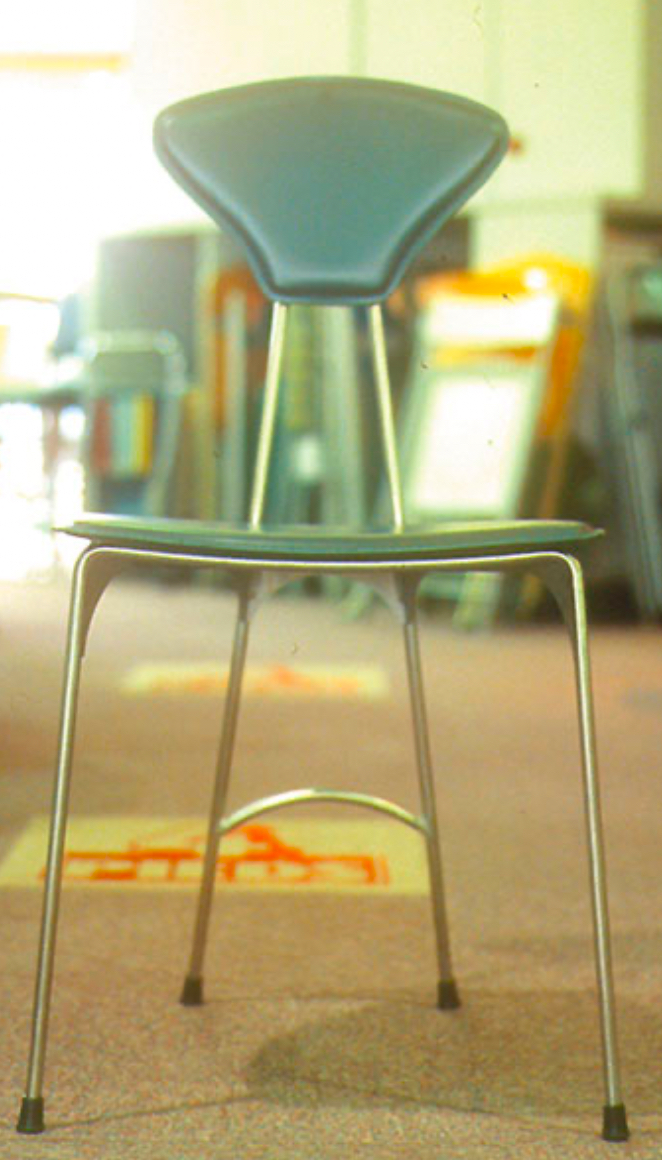
En el diseño contemporáneo, la innovación ya no se mide solo por la estética o la funcionalidad, sino por la capacidad de pensar en el futuro del planeta. El ecodiseño se convierte así en un lenguaje creativo que integra sostenibilidad, investigación y experimentación. Más que un estilo, es una filosofía: analizar el ciclo de vida de los objetos, repensar los materiales, cuestionar los procesos y diseñar no solo para el consumo, sino también para el “desconsumo”.
Desde esta mirada surge la llamada arqueología de materiales, un enfoque que no busca inventar objetos, sino rescatar y reimaginar aquello que parecía perdido. Materiales olvidados se convierten en protagonistas, adquiriendo nuevas funciones y posibilidades, como si la limitación misma fuese el motor de la creatividad.
In contemporary design, innovation is no longer defined solely by aesthetics or functionality, but by the ability to imagine a sustainable future. Ecodesign emerges as a creative language that blends sustainability, research, and experimentation. More than a style, it is a philosophy: analyzing the life cycle of objects, rethinking materials, questioning processes, and designing not only for consumption but also for “de-consumption.”
From this perspective arises the concept of material archaeology—an approach that doesn’t aim to create a chair, a table, or a storage unit, but to rediscover and reimagine materials on the verge of disappearing. Forgotten substances are brought back into the spotlight, given new purposes and possibilities, where limitation itself becomes the true engine of creativity.
Hoy en día, el diseño no se mide solo por la estética o la funcionalidad, también importa cómo se relaciona con la sostenibilidad. A eso lo llamamos ecodiseño: una forma de crear que tiene en cuenta todo el ciclo de vida de un objeto, desde su diseño y producción hasta la distribución, el uso y lo que pasa cuando deja de servir, incluyendo la gestión de residuos y la contaminación que pueda generar. También implica pensar en los materiales y tecnologías que usamos: si se pueden desmontar, rastrear, reciclar, si son renovables, biodegradables o ya reciclados. Además, el ecodiseño abre la puerta a reflexiones sobre la modularidad, la durabilidad, el producto como servicio… y, por supuesto, sobre cómo los usuarios se relacionan con los objetos y qué valores hay detrás de esas decisiones.
En este marco aparece la llamada arqueología de materiales. La idea no es diseñar “otra silla, otra mesa o un sistema de almacenaje más”, sino rescatar y repensar materiales que estaban desapareciendo o perdiendo calidad. El reto está en darles una nueva vida, una nueva función. Un poco como pasa con OULIPO en literatura: la limitación se convierte en motor creativo. Aquí, el material es la regla del juego, y es precisamente esa restricción la que dispara nuevas posibilidades de diseño.
Nowadays, design isn’t just judged by looks or functionality—it’s also about sustainability. That’s what ecodesign is all about: creating while considering the entire life cycle of an object. From its design and production to distribution, use, and even what happens when it’s no longer useful, including waste and pollution. It also means paying attention to materials and technologies: whether they can be disassembled, traced, recycled, or if they’re renewable, biodegradable, or already recycled. Ecodesign also brings in ideas like modularity, durability, the product-as-a-service model… and of course, how people actually interact with objects and the values behind those choices.
This is where material archaeology comes in. The goal isn’t to design “just another chair, another table, or a new storage system,” but to rescue and rethink materials that were disappearing or losing quality. The challenge is to give them new life and new functions. It’s a bit like OULIPO in literature: where strict rules push creativity forward. Here, the “rule” is the material itself—and that limitation becomes the real tool for design.
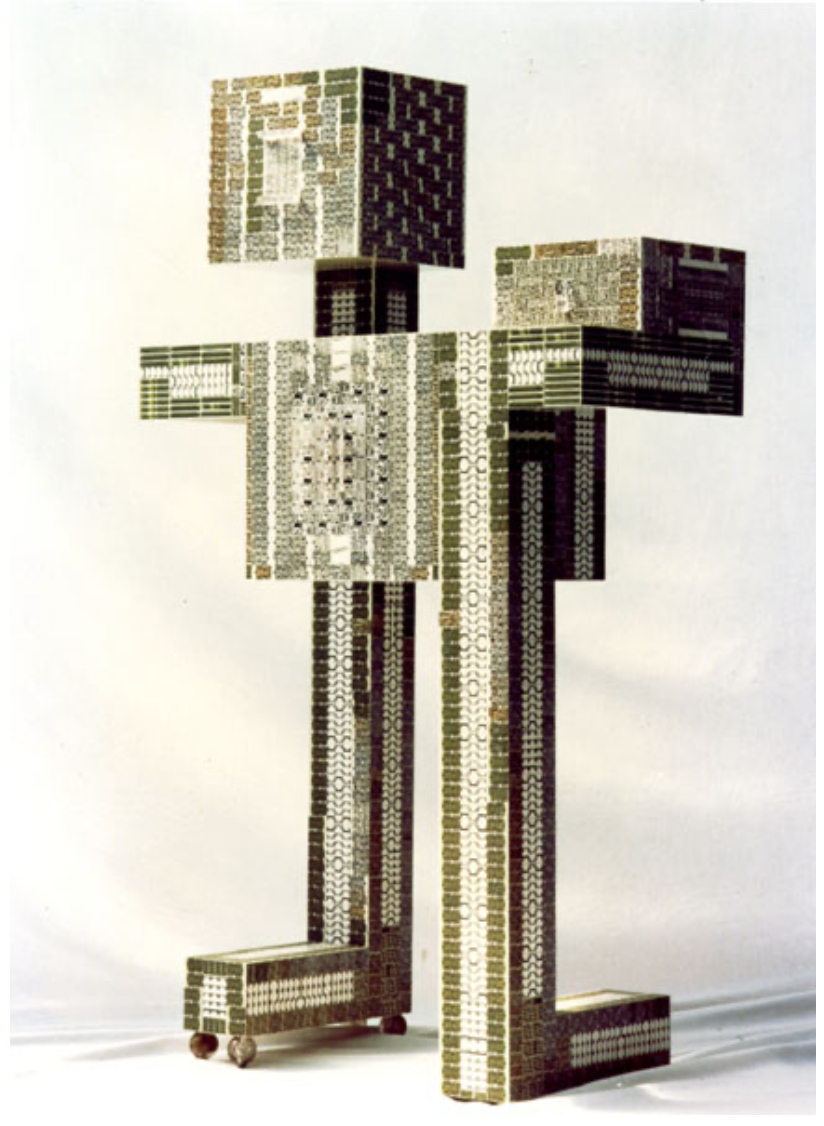
Substratos de aluminio
Abaris 1982 ph. R. Cerf © becheau-bourgeois
Substrats d’alumine
Abaris 1982 ph. R. Cerf © becheau-bourgeois
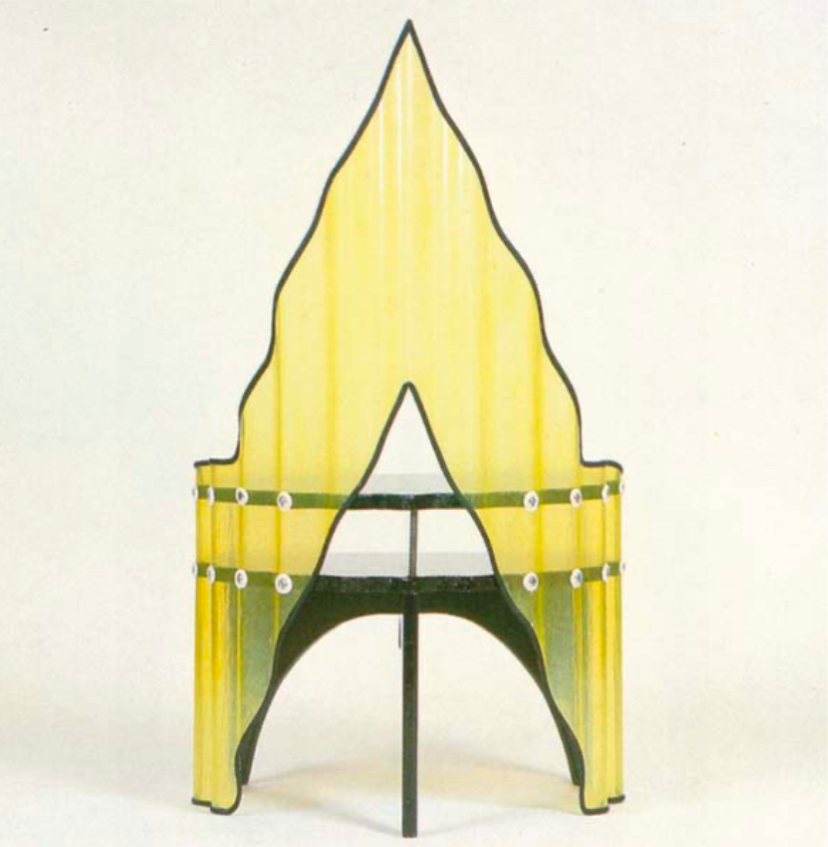
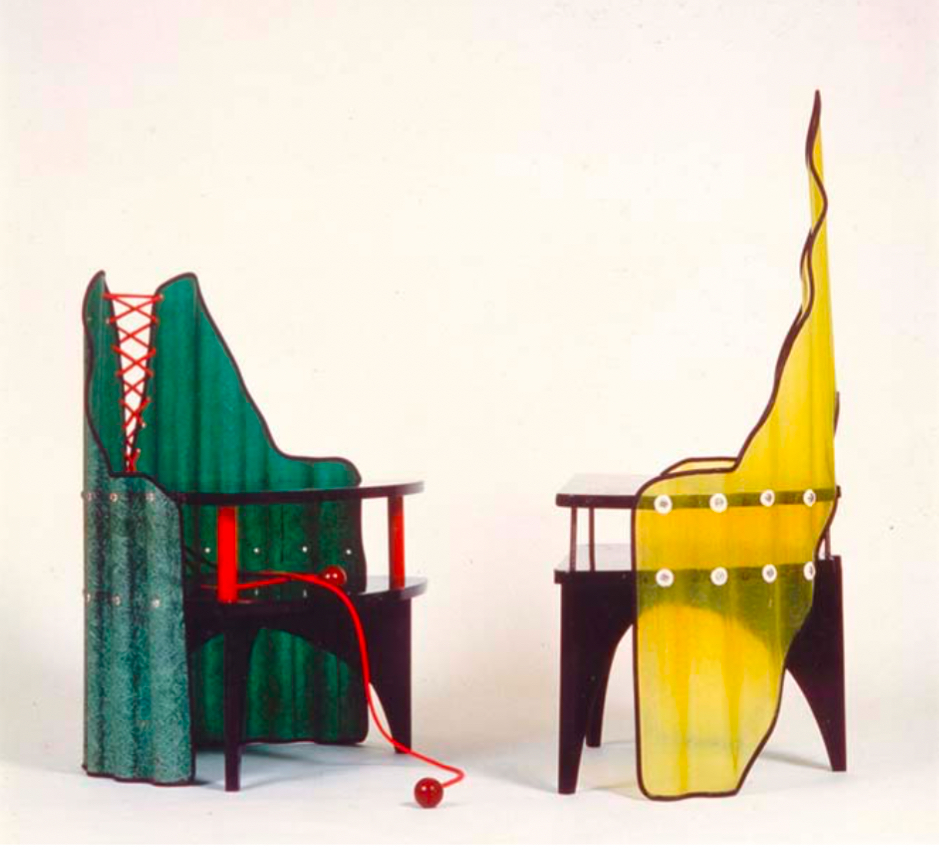
Hoja de poliéster
Chaise n°4 1982 – Chaise n° 4 et Fauteuil R. Cerf 1983 – ph. R. Cerf © becheau-bourgeois
Polyester sheet
Chaise n°4 1982 – Chaise n° 4 et Fauteuil R. Cerf 1983 – ph. R. Cerf © becheau-bourgeois
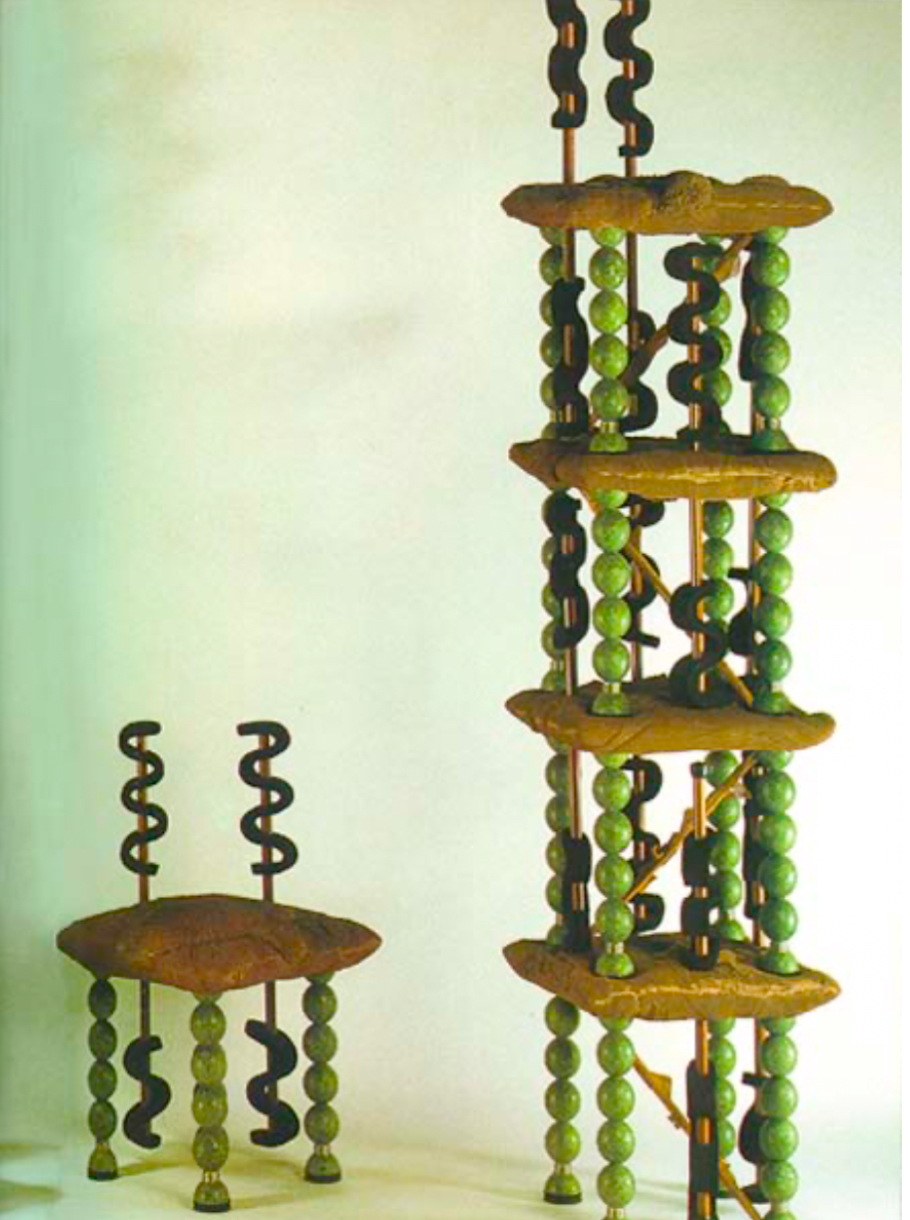
Chaises Quereix © becheau-bourgeois
Neptune © becheau-bourgeois
Chaises Quereix © becheau-bourgeois
Neptune © becheau-bourgeois