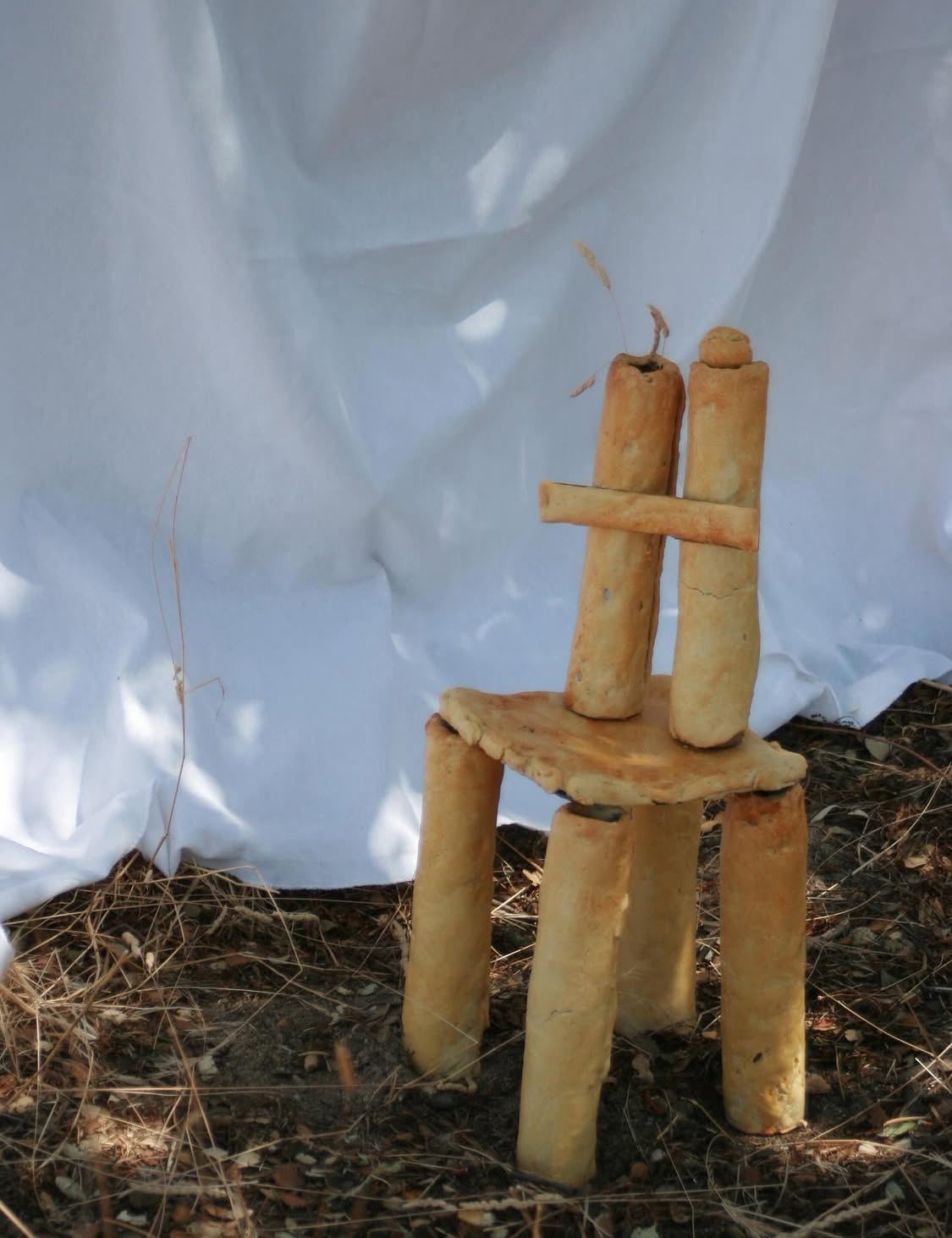
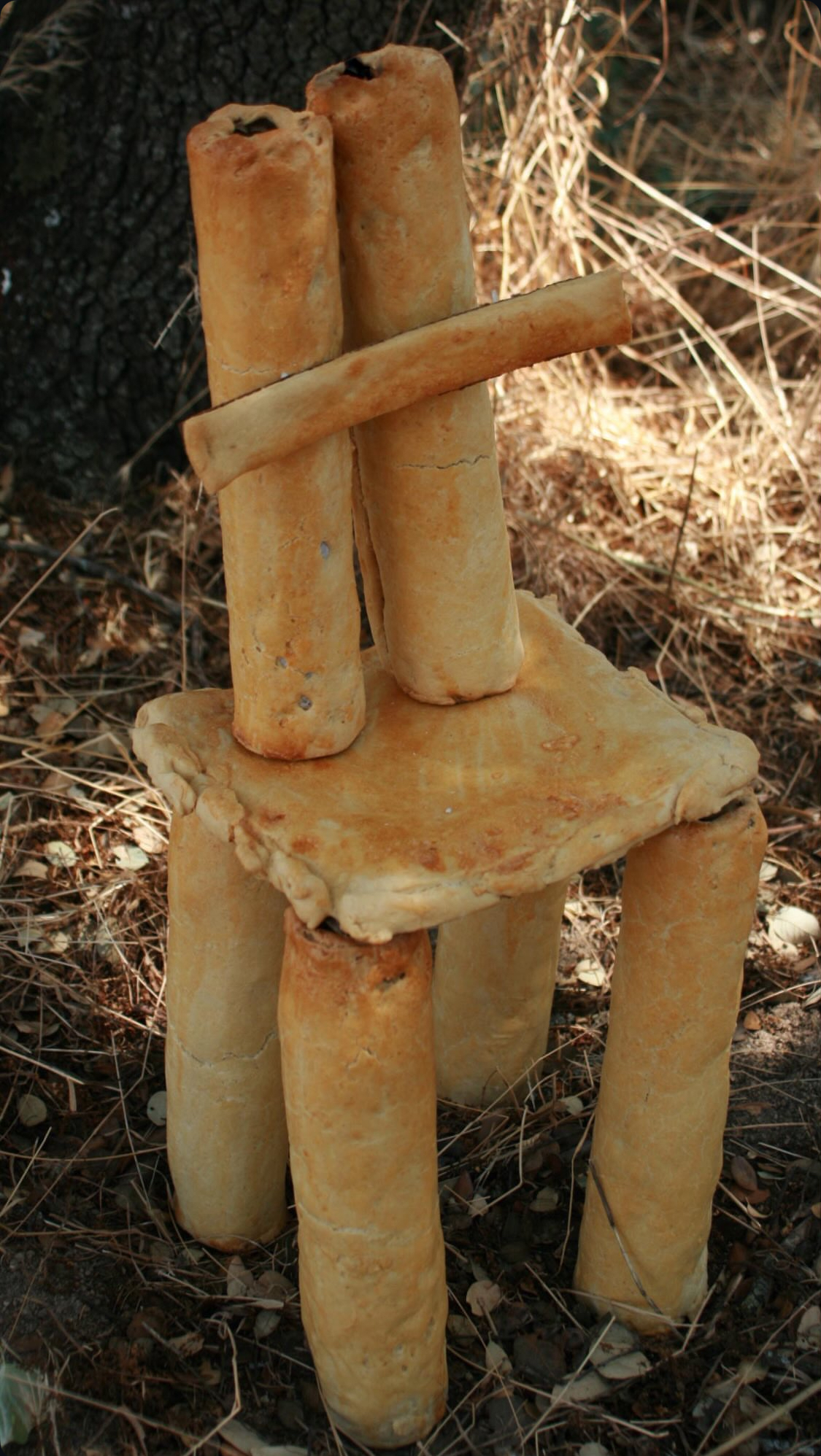
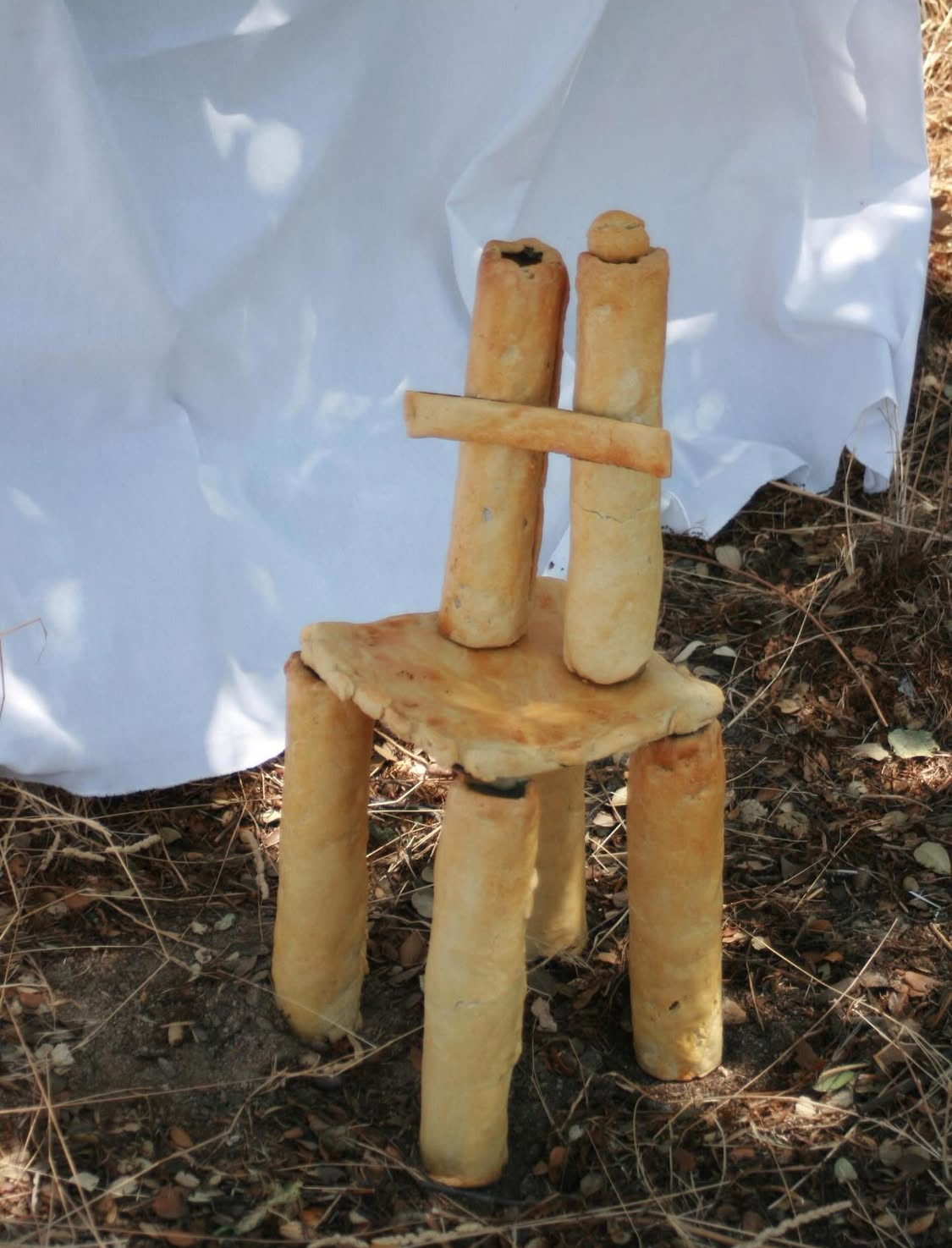
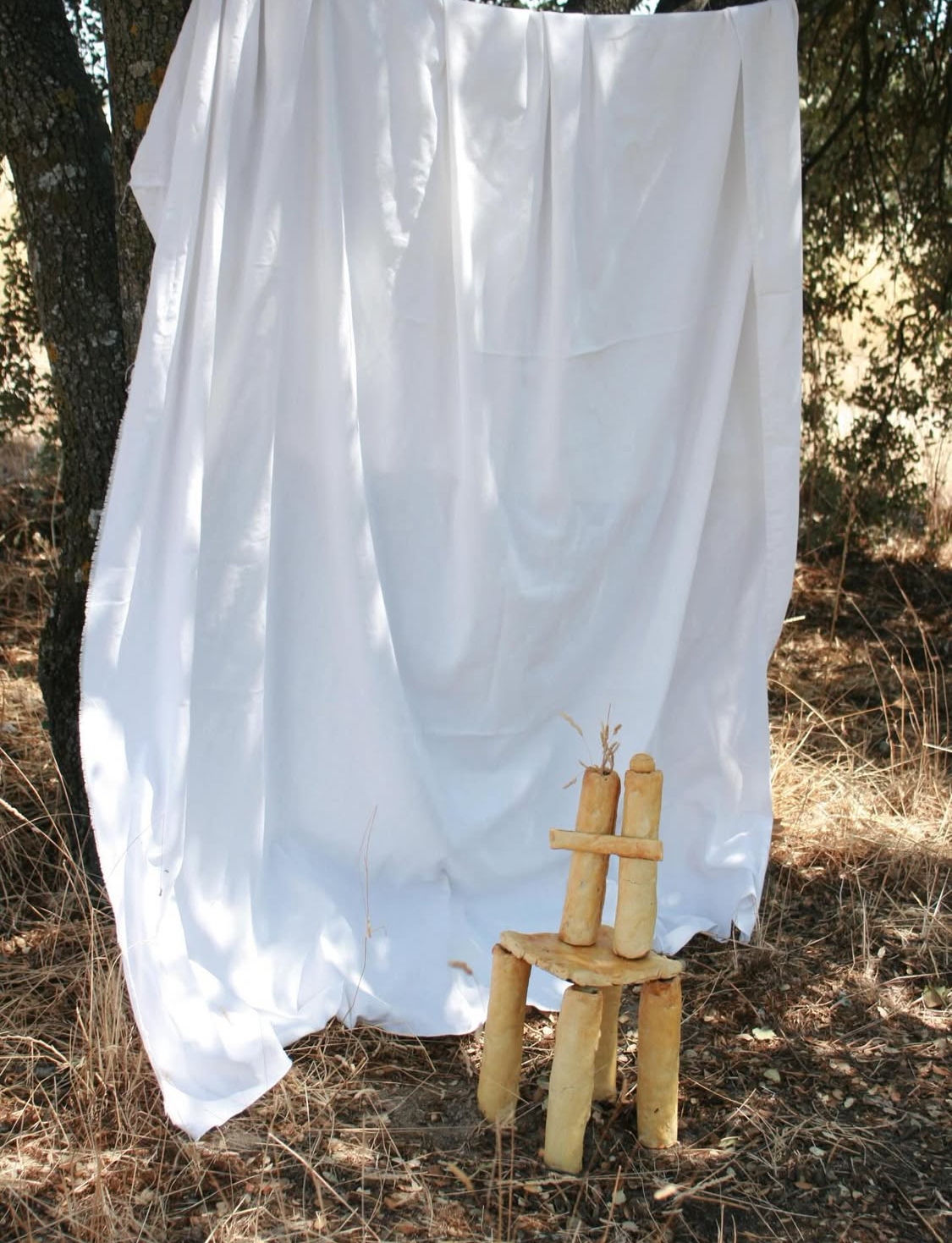
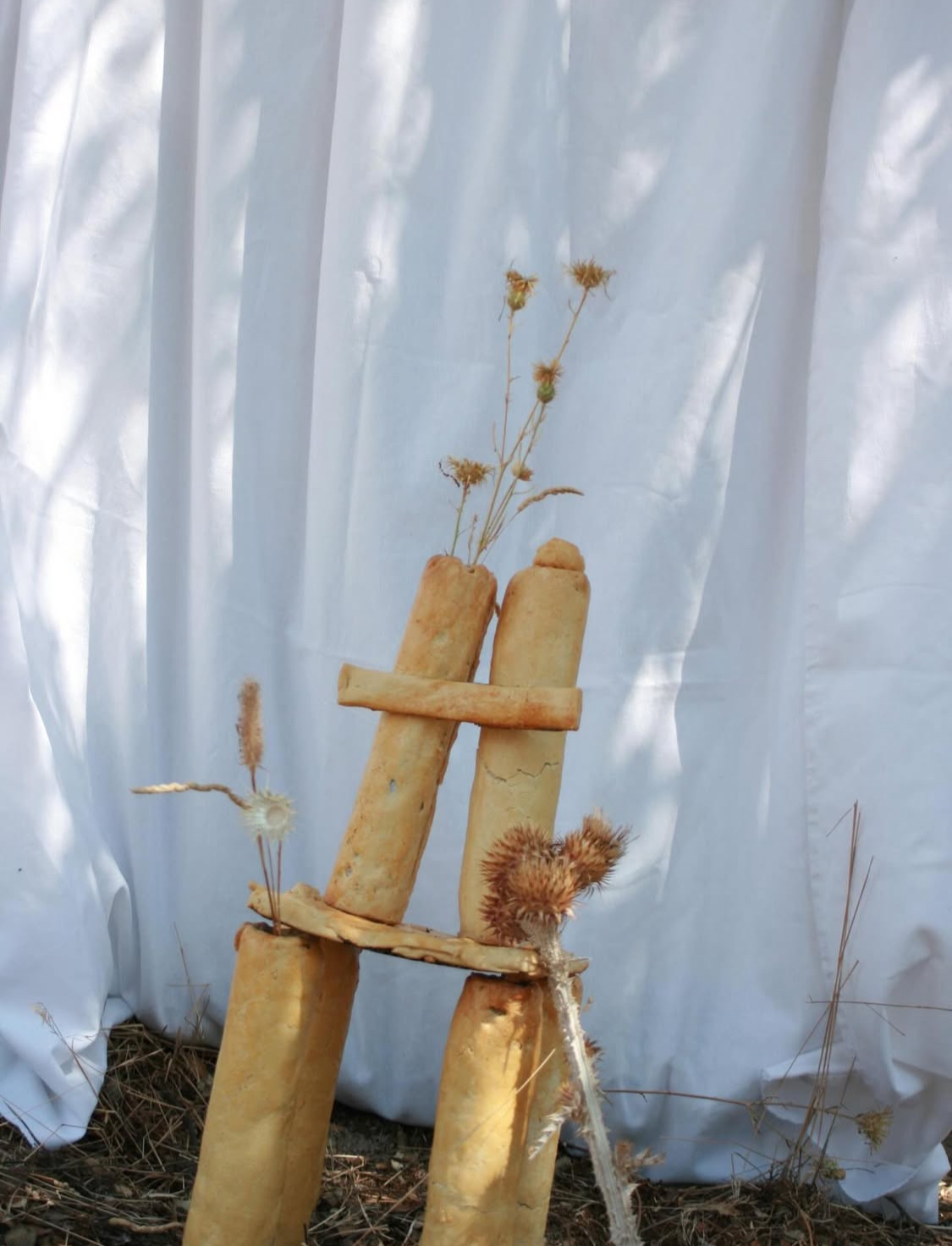
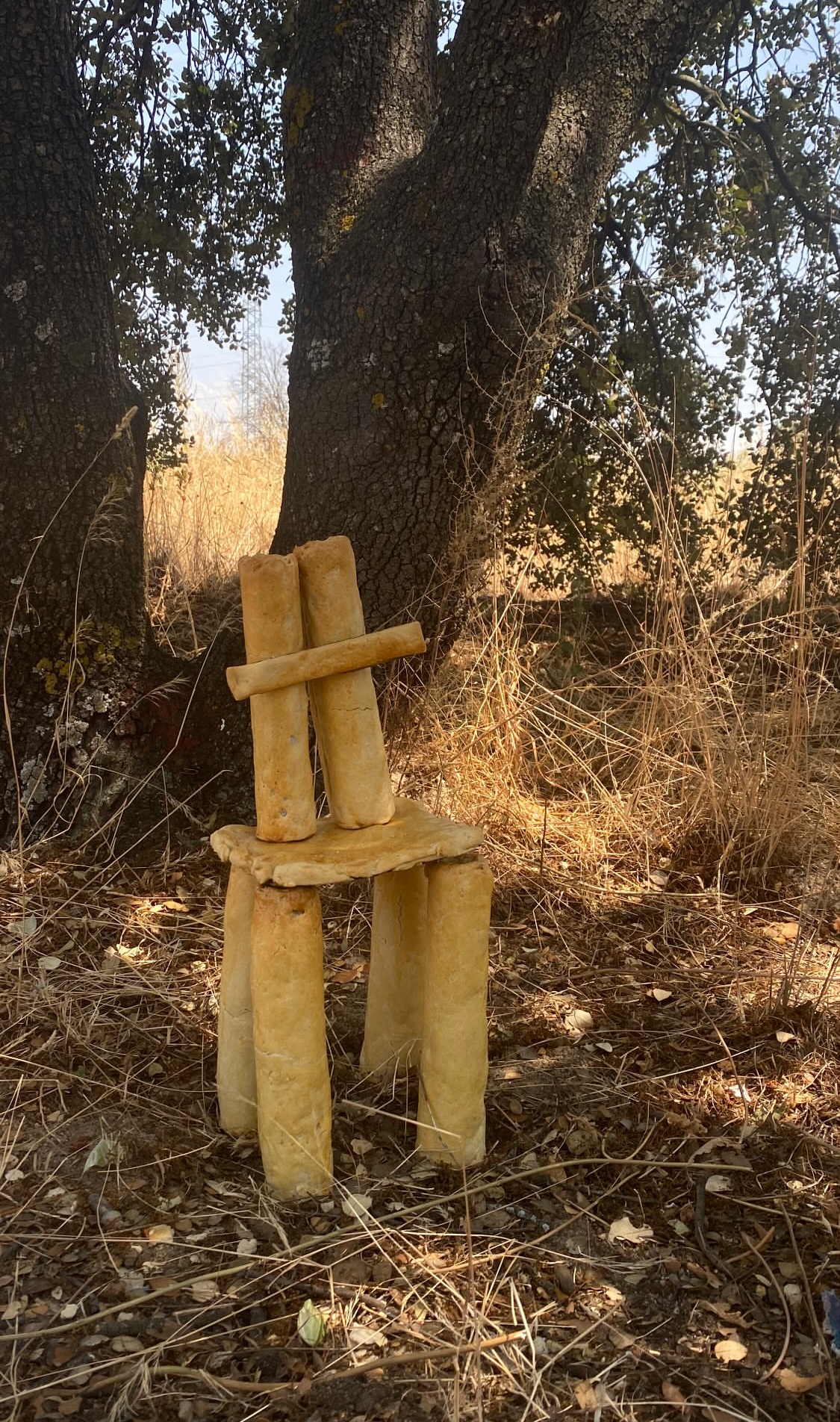
En HONNE Studio se propusieron un desafío único: crear una silla completamente hecha de pan. Cada parte —patas, asiento, respaldo— debía ser masa, y eso implicaba jugar con la fermentación y el efecto de la levadura, que hace que la masa crezca y se vuelva esponjosa… aunque a veces más de lo esperado. Además, la masa necesitaba soporte: si se horneaba plana, las patas se aplastaban y dejaban de ser funcionales. Por eso diseñaron ingeniosas estructuras que permitieran hornear cada pieza sin que perdiera forma. El resultado no es solo una silla: es pan, es arquitectura, es experimentación.
Crear diferentes masas y amasarlas en bucle fue de lo más fácil. Lo realmente difícil era construir la silla sin que se rompiera y sin que se desquebrajara en el horno. La masa puede fracturarse durante la cocción, y además todo tenía que encajar: la fermentación puede hacer que crezca más o menos, con sus propios imprevistos. La estructura también debía ser sólida pero ligera; si pesaba demasiado, la masa fina podría quebrarse. Y después, había que ser extremadamente cuidadoso al transportarla, porque se trataba de una masa súper frágil. Aunque el pan es un alimento poderoso y cotidiano para millones de personas, aquí se convirtió en algo delicado, pero a la vez resistente.
At HONNE Studio, they set out on a unique challenge: to create a chair entirely made of bread. Every part —legs, seat, backrest— had to be dough, which meant working with fermentation and the effect of yeast, making the dough rise and become airy… sometimes more than expected. The dough also needed support: if baked flat, the legs would collapse and lose their shape. That’s why they designed clever structures to bake each piece without compromising form. The result isn’t just a chair: it’s bread, it’s architecture, it’s experimentation.
Creating different doughs and kneading them in a loop was the easiest part. The real challenge was building the chair so it wouldn’t break or crumble in the oven. Dough can fracture during baking, and everything had to fit perfectly: fermentation can make it rise more or less, with its own surprises. The structure also needed to be solid but light; if it was too heavy, the thin dough could crack. And then, it had to be handled with extreme care when transporting it, because it was incredibly fragile. Although bread is a powerful, everyday staple for millions, here it became something delicate, yet at the same time, strong.
Los errores también fermentan.
Y también sostienen.
El pan ya no es solo un símbolo de alimento.
Es resistencia estructural en un sistema comestible.
Lo frágil no se rompe,
se revela.
Mistakes ferment too.
They also sustain.
Bread is no longer just a symbol of nourishment.
It is structural resistance in an edible system.
The fragile does not break,
it reveals itself.